Carences nutritives, ravageurs et moisissures : guide complet de diagnostic et de lutte intégrée (IPM)

Yellowing fan leaves, rust-brown spots, tiny speckles on the upper leaf surface or a grey fuzz inside a dense main cola: when something goes wrong in the grow tent or garden, many symptoms look deceptively similar at first glance. This complete reference guide helps you distinguish nutrient deficiencies, overfeeding and pH lockout from insect/mite pests and fungal pathogens – backed by peer-reviewed cannabis studies and proven biological IPM solutions.
1. Recognising Nutrient Deficiencies: Mobile vs. Immobile Elements & Diagnostic Table
To diagnose a nutritional disorder accurately, the first question is always: Where on the plant do symptoms appear first – on older lower fan leaves or at the young upper shoot tips? Controlled nutrient-deprivation studies in Cannabis sativa by Cockson et al. (2019) and Saloner & Bernstein (2020/2021) show how phloem mobility determines symptom location:[1][2][3] well established
- Mobile nutrients (Nitrogen N, Phosphorus P, Potassium K, Magnesium Mg): When root uptake falls short, the plant translocates these elements out of older lower fan leaves to feed actively growing top shoots. Symptoms therefore start on the lower and middle leaves.[1][2]
- Immobile nutrients (Calcium Ca, Iron Fe, Sulphur S, Zinc Zn, Manganese Mn, Boron B): Once locked into cell walls or enzymes, these elements cannot be relocated. Deficiencies always appear first at the youngest upper leaves and growing tips.[1]
| Nutrient | Mobility (Zone) | Typical Visual Symptoms in Cannabis sativa | Common Practical Cause |
|---|---|---|---|
| Nitrogen (N) | Mobile (older lower leaves) |
Uniform pale-green to lemon-yellow chlorosis progressing from bottom leaves upward; lower leaves eventually drop; reduced growth rate.[1][2] (Note: gradual yellowing in the final 2 weeks of flower is normal senescence!) | Insufficient vegetative/early-bloom feeding or root-bound pots. |
| Phosphorus (P) | Mobile (lower/middle leaves) |
Dull dark-green or bluish-green foliage, followed by bronze/dark-purple necrotic blotches, downward-curling dry leaf margins, red-purple petioles and slow bud development.[1][4] | Cold root zone (< 15 °C blocks P uptake), pH drift or low bloom P. |
| Potassium (K) | Mobile (older/middle leaves) |
Bright yellow to rust-brown marginal leaf scorch along serrated edges and tips while inner leaf blades stay green; weak stems.[1][3] | High mid-flower K demand or cation antagonism from excess Ca/N. |
| Magnesium (Mg) | Mobile (middle & lower leaves) |
Classic interveinal chlorosis: tissue between the veins turns yellow while veins remain sharply green like a herringbone pattern; margins may curl upward.[1] | Very soft tap/RO water under intense LED lighting or unbuffered coco coir. |
| Calcium (Ca) | Immobile (young upper leaves) |
Small rust-brown spots with dark borders on newer leaves, distorted or hooked shoot tips, brittle stems and stunted root tips.[1] | Soft water, unbuffered coco coir, acidic root pH (< 5.8 in soil) or K excess. |
| Iron (Fe) | Immobile (newest top shoots) |
New growth emerges bright lemon-yellow from the base of the leaflets outward while fine veins initially remain green.[1] | Almost always caused by high root-zone pH (> 7.0) or cold, waterlogged roots rather than lack of iron in the fertilizer. |
| Sulphur (S) & Micros (Zn, Mn, B) | Immobile (upper new growth) |
S: Uniform yellowing of young upper leaves. Zn/Mn: Narrow, twisted young leaflets with interveinal paling. B: Stunted,necrotic main meristems.[1] | Alkaline substrate pH (> 6.8–7.0) or leached medium. |
2. Overfeeding & Nutrient Lockout (pH & Salt Build-up)
A classic beginner mistake is seeing a yellow or spotted leaf and adding even more fertilizer – turning a pH lockout into severe salt toxicity. Response-surface studies by Bevan et al. (2021) and Saloner & Bernstein (2020/2021) demonstrate that floral yield increases with N and P only up to an optimum; excess salts cause osmotic stress, leaf tip burn and lower cannabinoid concentrations.[2][3][4] well established
Signs of Overfeeding (Nutrient Burn & N Toxicity)
- Deep, glossy dark-green leaves with downward-hooked tips (“The Claw”) from excess nitrogen.
- Crispy burnt leaf tips (Tip Burn): The outermost 1–3 mm of leaf tips turn yellow-brown across the whole plant.
3. Integrated Pest Management (IPM), Beneficials & Neem Oil in Vegetative Growth

As reviewed by Buirs & Punja (2024), Integrated Pest Management (IPM) combines strict hygiene, climate control, sticky traps for monitoring and biological control agents so harvested flowers remain free of synthetic pesticide residues:[5][6]
- Cold-pressed Neem Oil (Azadirachta indica / active ingredient azadirachtin): During the vegetative phase, emulsified neem oil is a proven botanical spray against spider mites, thrips and aphids (acting as an antifeedant and moulting disruptor)[7]. Golden rule: Never spray neem oil on flowering buds – it ruins flavour and aroma and leaves oily residues!
- During flowering: Rely exclusively on residue-free beneficial predators and nematodes.[6]
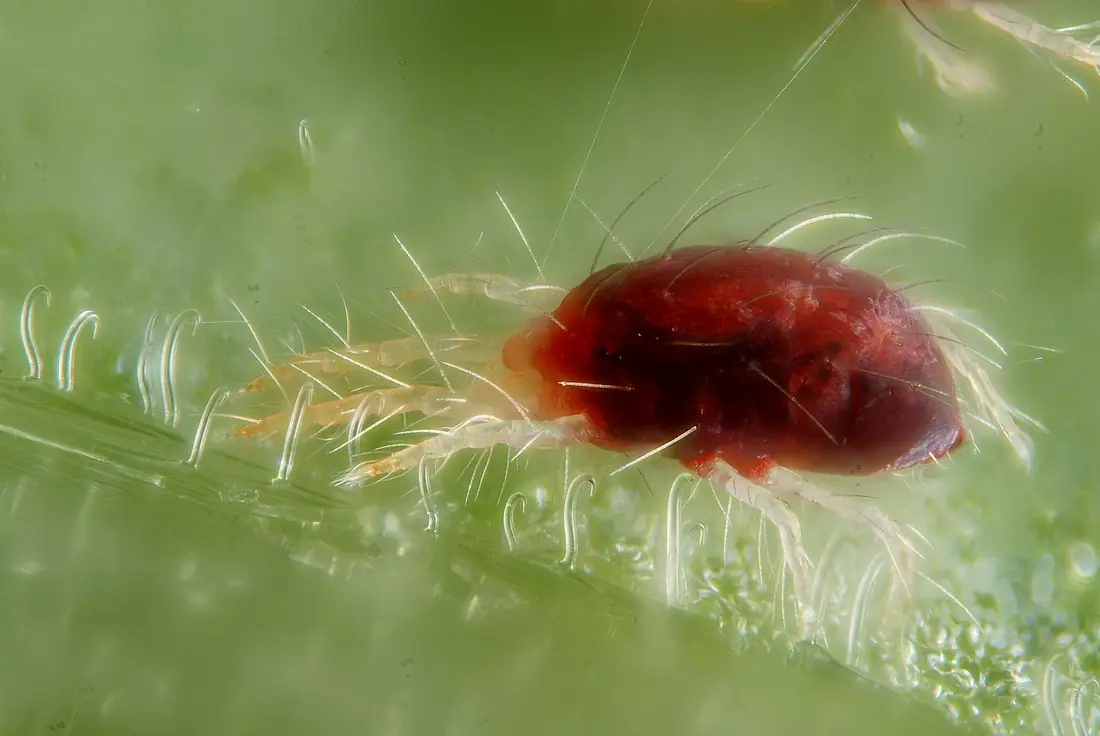
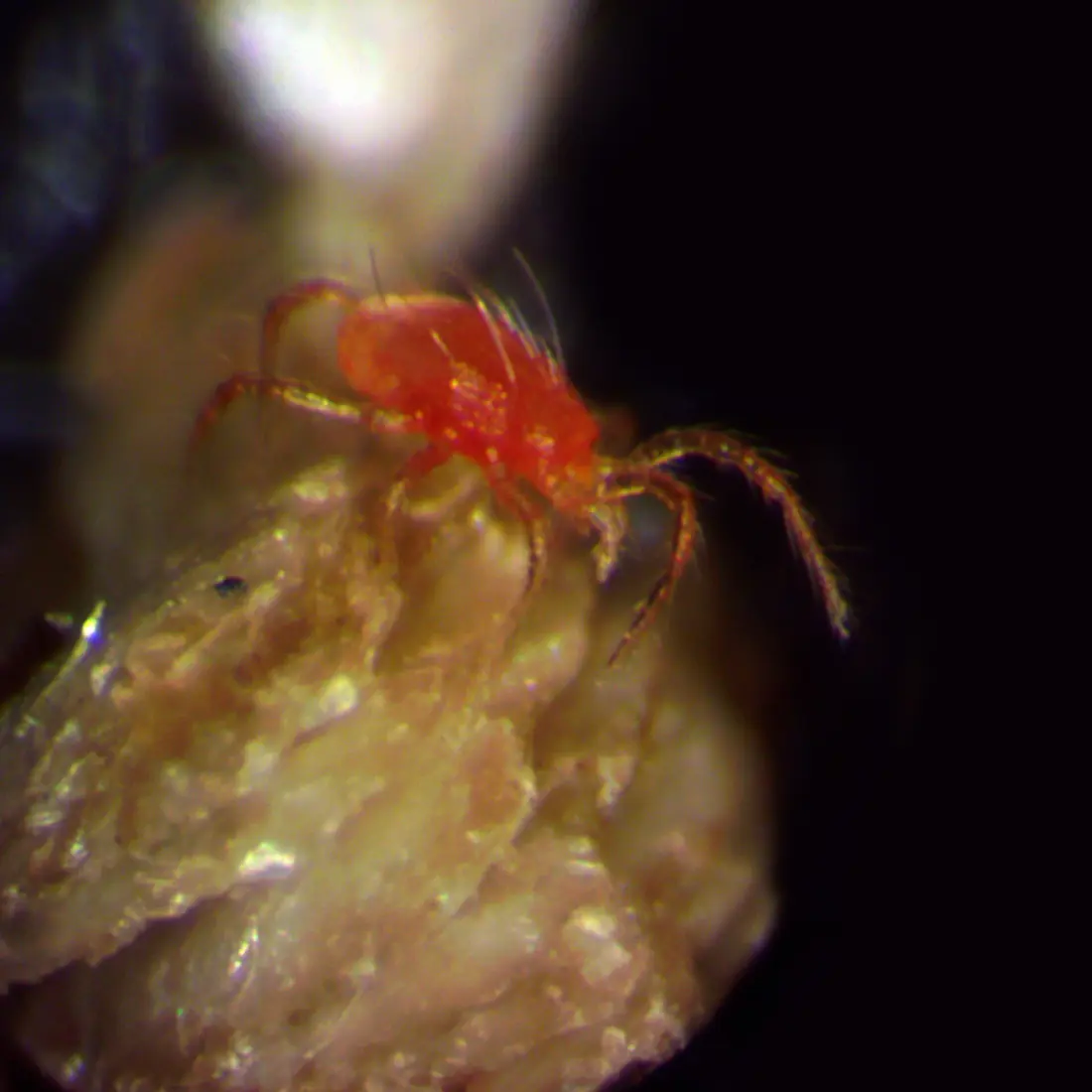
4. Two-Spotted Spider Mites (Tetranychus urticae)
Symptoms: Fine white/yellow stippling dots on upper leaf surfaces; 0.4 mm mites, round eggs and fine silk webbing on leaf undersides and buds in warm, dry air.[6] Biological control: Neem oil on leaf undersides in veg; predatory mites Phytoseiulus persimilis (rapid knockdown) and Amblyseius californicus (preventative & heat-tolerant) in flower.[6]
5. Fungus Gnats (Sciaridae)
Symptoms: Small black gnats flying around moist soil; translucent white larvae with black heads chew fine root hairs and spread Pythium/Fusarium.[5][6] Biological control: Let the top 2–3 cm of soil dry between waterings, hang yellow sticky traps for adults, and drench the substrate with Steinernema feltiae (SF) beneficial nematodes or BTI (Bacillus thuringiensis israelensis) to eliminate larvae.[6]
6. Thrips (Frankliniella occidentalis / Thrips tabaci)
Symptoms: Silvery-metallic scraped patches on leaves accompanied by tiny black faecal specks; slender 1–2 mm yellow larvae and dark winged adults.[6] Biological control: Blue sticky traps, neem oil in veg, and predatory mites (Amblyseius cucumeris / A. swirskii) or lacewing larvae (Chrysoperla carnea).[6]
7. Aphids (Aphididae)
Symptoms: Clusters of soft-bodied insects on stems and leaf undersides secreting sticky honeydew.[6] Biological control: Green lacewing larvae (Chrysoperla carnea), parasitic wasps (Aphidius colemani) and ladybird larvae (plus neem oil in veg only).[6]
8. Powdery Mildew (Golovinomyces spp.)
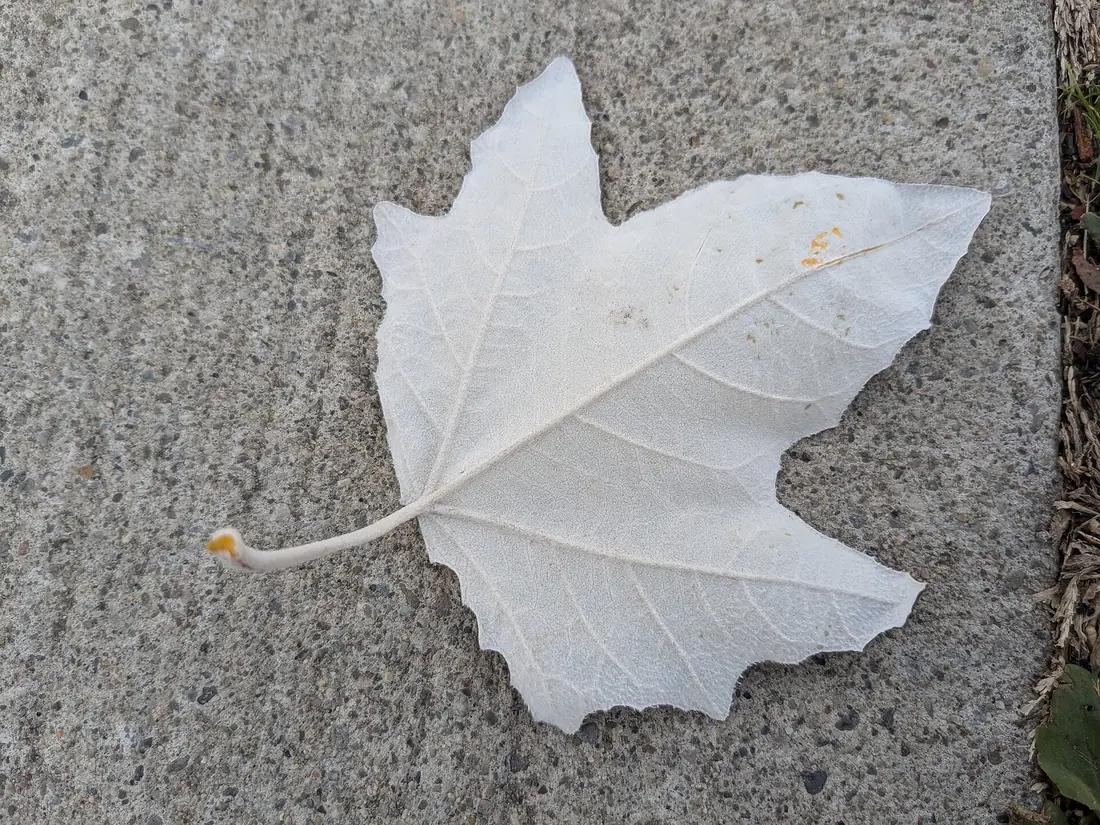

White flour-like fungal patches on fan leaves and stems, favoured by stagnant air and high humidity spikes.[5][6] Immediately improve intake, exhaust and canopy air circulation, lower humidity, and carefully bag and remove affected leaves.[5][6]
9. Grey Mould / Bud Rot (Botrytis cinerea)
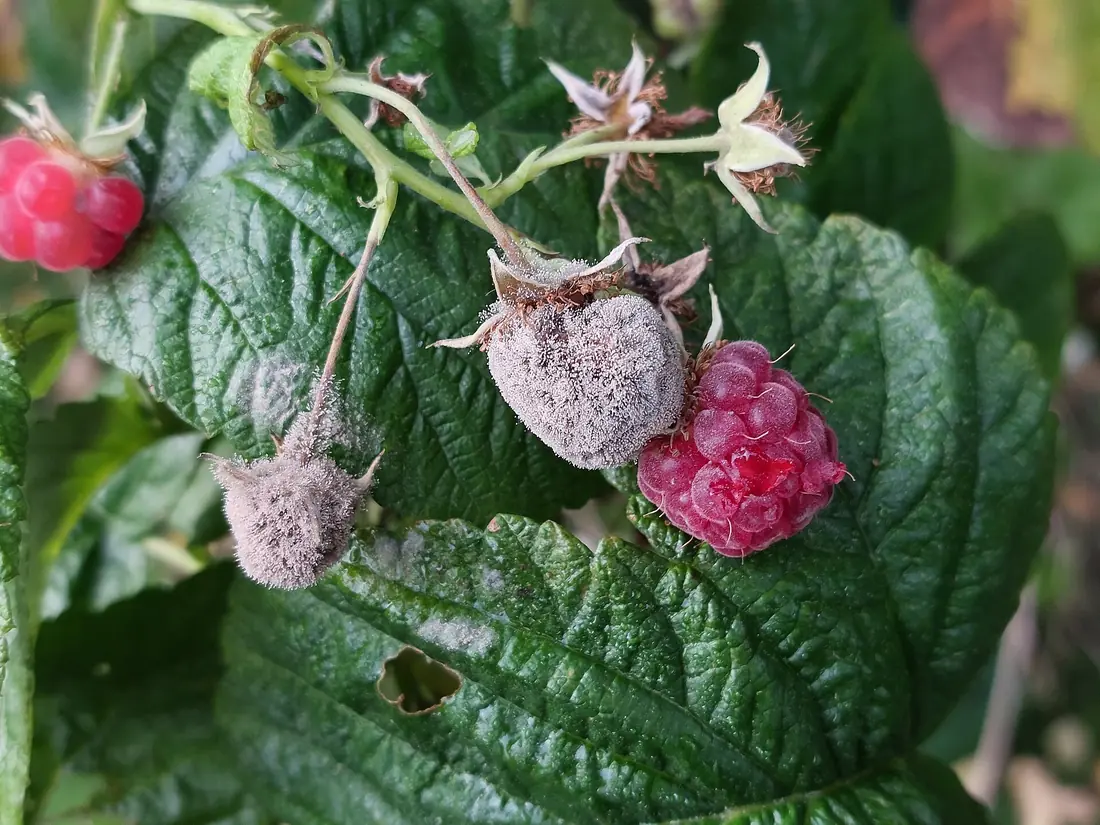

Why bud rot starts from the inside out: Dense colas trap transpiration moisture around the central stem. A single wilted, yellow-brown “sugar leaf” protruding from a thick cola that pulls out effortlessly is the classic warning sign.[5] Action: Immediately check intake, exhaust and internal air circulation, drop RH to 40–50%, and generously cut away and dispose of all affected buds (never smoke or process mouldy cannabis!).[5][6]
Flo’s Practical Experience
- Against most pests: Neem oil in veg! Cold-pressed neem oil (azadirachtin) is my go-to preventative and early treatment during the vegetative phase. Never spray neem oil on flowering buds – in flower, stick strictly to beneficials like predatory mites and SF nematodes!
- Against mould: Check airflow & cut away generously! First check that supply air (intake), exhaust air and internal air circulation are running properly and immediately lower humidity. If mould has already formed, generously cut away the affected parts immediately and dispose of them – never smoke or process mouldy material!
Note: personal experiences are subjective and are not a recommendation.
🌍 Note sur la traduction : Cet article a été rédigé à l’origine en allemand et traduit avec soin. Tu es locuteur natif / locutrice native et tu remarques une formulation ou un terme botanique qui pourrait être amélioré ? Écris-nous volontiers à kontakt@igrowpedia.de ou sur X (@MisterSm3ilz420) – tous les contributeurs sont mentionnés sur demande dans nos Remerciements aux Parrains linguistiques !
Sources
Tous les liens vérifiés pour la dernière fois le 22/10/2026.
- Cockson P, Landis H, Smith T, Hicks K, Whipker BE (2019): Characterization of Nutrient Disorders of Cannabis sativa. Applied Sciences 9(20):4432. doi:10.3390/app9204432 étude expérimentale
- Saloner A, Bernstein N (2020): Response of Medical Cannabis (Cannabis sativa L.) to Nitrogen Supply Under Long Photoperiod. Frontiers in Plant Science 11:572293. doi:10.3389/fpls.2020.572293 étude expérimentale
- Saloner A, Bernstein N (2021): Nitrogen supply affects cannabinoid and terpenoid profile in medical cannabis (Cannabis sativa L.). Industrial Crops and Products 167:113516. doi:10.1016/j.indcrop.2021.113516 étude expérimentale
- Bevan L, Jones M, Zheng Y (2021): Optimisation of Nitrogen, Phosphorus, and Potassium for Soilless Production of Cannabis sativa in the Flowering Stage Using Response Surface Analysis. Frontiers in Plant Science 12:764103. doi:10.3389/fpls.2021.764103 étude expérimentale
- Punja ZK, Collyer D, Scott C et al. (2019): Pathogens and Molds Affecting Production and Quality of Cannabis sativa L. Frontiers in Plant Science 10:1120. doi:10.3389/fpls.2019.01120 étude
- Buirs L, Punja ZK (2024): Integrated Management of Pathogens and Microbes in Cannabis sativa L. (Cannabis) under Greenhouse Conditions. Plants 13(6):786. doi:10.3390/plants13060786 revue
- Mordue (Luntz) AJ, Nisbet AJ (2000): Azadirachtin from the Neem Tree Azadirachta indica: its Action Against Insects. Anais da Sociedade Entomológica do Brasil 29(4):615–632. doi:10.1590/S0301-80592000000400001 revue