동반식물(Companion Planting)과 클로버 과(콩과): 살아있는 질소 저장고의 과학과 실전
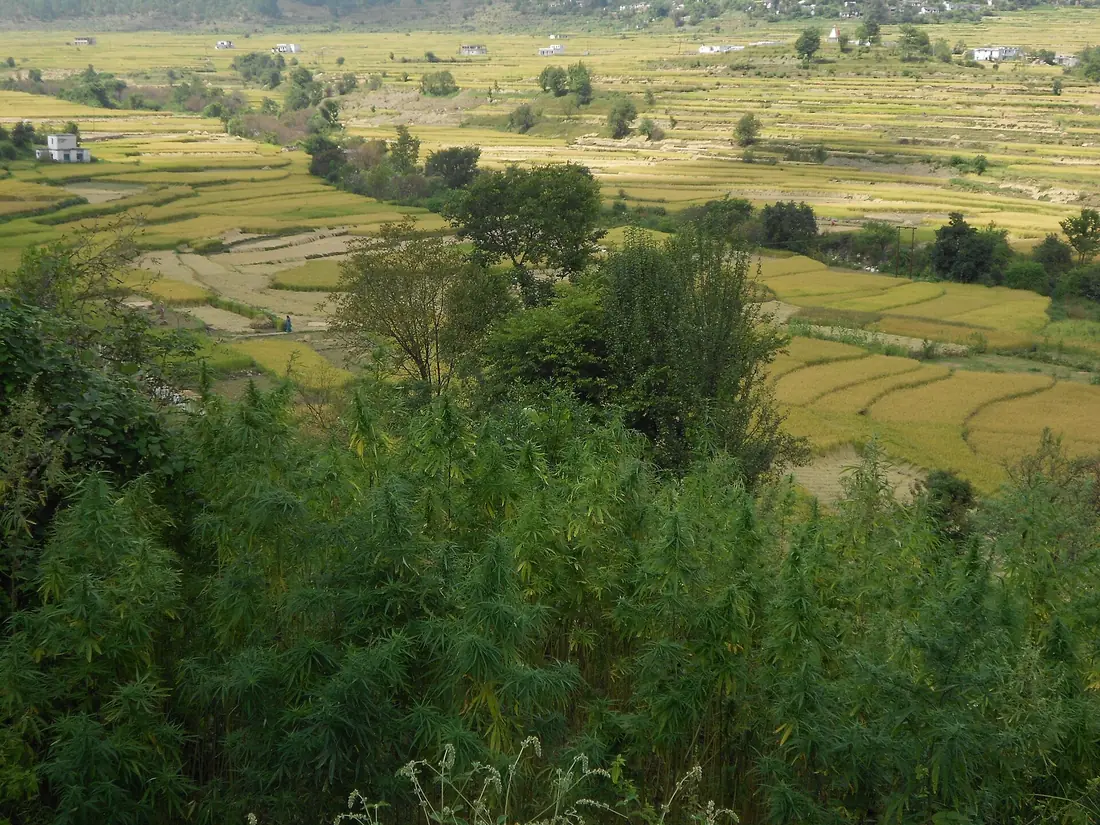

토끼풀·크림슨클로버·알팔파가 뿌리혹박테리아(Rhizobium) 공생으로 대기 질소를 고정하는 원리, 메리골드·바질 등 동반식물 표 및 실내외 비교.
1. The Clover Family (Fabaceae) as a Living Nitrogen Bank, Mycorrhizal Bridge & Natural Soil CO₂
Although Earth’s atmosphere is 78% nitrogen gas (N₂), cannabis cannot break the N≡N triple bond directly. Legumes of the clover family (Fabaceae: Dutch white clover Trifolium repens, crimson clover Trifolium incarnatum, red clover Trifolium pratense, and alfalfa/lucerne Medicago sativa) form root nodules with symbiotic Rhizobium / Ensifer bacteria.[1][2] Inside these pink leghaemoglobin-protected nodules, the enzyme nitrogenase converts atmospheric N₂ into plant-available ammonium (NH₄⁺) and amino acids.[1] well established
- “Chop & Drop” & Mycorrhizal Transfer: Clover shares amino acids across shared arbuscular mycorrhizal networks and, when trimmed back as a surface mulch (“Chop & Drop”), sheds root nodules that soil microbes mineralise into gentle organic nitrogen for the cannabis plant.[2]
- Living Mulch: Dwarf white clover shades the soil surface, prevents crusting, reduces water evaporation, and allows fine cannabis feeder roots to colonise the top centimetres of soil.
- Soil Respiration & Natural CO₂ in Living Soil: Cannabis is a C₃ plant whose photosynthesis responds to elevated CO₂ only in sealed chambers under intense PPFD (Chandra et al. 2011).[6] In an actively exhausted grow tent, expensive commercial “CO₂ mushroom bags” are sucked straight out the exhaust duct. Meanwhile, ambient indoor living-space air (typically 600–850 ppm CO₂) combined with natural microbial and root respiration in Living Soil supplies a steady, free stream of CO₂ rising directly beneath the leaf stomata!
2. Best Companion Plants for Cannabis at a Glance (Master Table & Indoor vs. Outdoor)
| Companion Plant (Botanical Name) | Primary Mechanism & Function | Practical Application (Indoor / Outdoor) |
|---|---|---|
| Dwarf White Clover (Trifolium repens) |
Living mulch & N₂ fixation: Low-growing (5–10 cm), fixes atmospheric nitrogen via Rhizobium nodules and keeps top-soil moist.[1][2] | Best choice for large Living Soil pots (25–50+ L) and raised beds; trim via “Chop & Drop” before mid-flower. |
| Crimson & Red Clover (Trifolium incarnatum / T. pratense) |
High-biomass green manure: Strong N fixation and organic mulch biomass.[1][2] | Ideal cover crop in outdoor beds; trim early around small seedlings. |
| Alfalfa / Lucerne (Medicago sativa) |
Nitrogen + natural triacontanol: Legume rich in the natural growth-promoting fatty alcohol triacontanol (see natural biostimulants).[3] | Use young shoots as “Chop & Drop” top-dress mulch in Living Soil. |
| French Marigold (Tagetes patula / T. erecta) |
Root-knot nematode suppression: Roots exude sulfur-containing thiophenes (α-terthienyl) that suppress plant-parasitic nematodes; flowers feed hoverflies.[4] | Plant along the borders of outdoor garden beds and greenhouse containers. |
| Pot Marigold / Calendula & Chamomile (Calendula officinalis / Matricaria chamomilla) |
Beneficial insect banker plants: Attract ladybirds, lacewings (Chrysoperla carnea) and hoverflies that prey on aphids and thrips.[5] | Place around outdoor, balcony and greenhouse grows. |
| Basil, Coriander & Dill (Ocimum basilicum, Coriandrum sativum, Anethum graveolens) |
Aromatic pest masking & predator nectar: Volatiles (linalool, eugenol) confuse thrips and whiteflies; umbel flowers feed parasitic wasps and lacewings.[5] | Grow in companion pots around balcony or garden plants. |
| Yarrow, Lavender & Peppermint (Achillea millefolium, Lavandula, Mentha × piperita) |
Strong insect repellent: Menthol, camphor and terpenes deter ants, aphids and flea beetles.[5] | Crucial rule for mint: Mint spreads aggressively via underground runners – always keep mint in its own separate pot! |
Indoor vs. Outdoor Reality Check: Companion planting shines outdoors in garden beds/balconies and indoors in large Living Soil beds or pots (25–50+ L). In small indoor pots (< 11–15 L) fed with mineral salts, companion plants compete for root space and add extra transpiration humidity during late flowering.
Flo’s Experience: “Understand nature, then copy nature”

In nature, healthy soil is never left bare to bake under the sun. Following my motto “Understand nature, then copy nature” (Kapier die Natur, dann kopier die Natur), the clover family (white clover, crimson clover, alfalfa) is a brilliant partner in organic soil: its Rhizobium root nodules pull nitrogen straight out of the air, shade the topsoil so feeder roots thrive right up to the surface, and turn into rich organic mulch whenever I trim them back (“Chop & Drop”) – while microbial soil respiration and normal indoor room air provide all the natural CO₂ the plants need for free!
Note: personal experiences are subjective and are not a recommendation.
🌍 번역 안내: 이 글은 독일어 원문으로 작성되어 세심하게 번역되었습니다. 원어민 독자로서 더 자연스럽게 다듬을 수 있는 표현이나 식물학 전문 용어를 발견하셨다면 언제든 kontakt@igrowpedia.de 또는 X(@MisterSm3ilz420)로 알려주세요 — 도움을 주신 모든 분은 희망 시 언어 후원자 감사의 글에 소개해 드립니다!
출처
모든 링크는 2026년 10월 22일에 마지막으로 확인했습니다.
- Oldroyd GED, Murray JD, Poole PS, Downie JA (2011): The Rules of Engagement in the Legume-Rhizobial Symbiosis. Annual Review of Genetics 45:119–144. doi:10.1146/annurev-genet-110410-132549 리뷰
- Peoples MB, Brockwell J, Herridge DF et al. (2009): The contributions of nitrogen-fixing crop legumes to the productivity of agricultural systems. Symbiosis 48(1–3):1–17. doi:10.1007/BF03179980 리뷰
- Naeem M, Khan MMA, Moinuddin (2012): Triacontanol: a potent plant growth regulator in agriculture. Journal of Plant Interactions 7(2):129–142. doi:10.1080/17429145.2011.619281 리뷰
- Hooks CRR, Wang KH, Ploeg A, McSorley R (2010): Using marigold (Tagetes spp.) as a cover crop to protect crops from plant-parasitic nematodes. Applied Soil Ecology 46(3):307–320. doi:10.1016/j.apsoil.2010.09.005 리뷰
- Parolin P, Bresch C, Desneux N et al. (2012): Secondary plants used in biological control: A review. International Journal of Pest Management 58(2):91–100. doi:10.1080/09670874.2012.659229 리뷰
- Chandra S, Lata H, Khan IA, ElSohly MA (2011): Photosynthetic response of Cannabis sativa L., an important medicinal plant, to elevated levels of CO₂. Physiologia Plantarum 142(3):294–302. doi:10.1111/j.1399-3054.2011.01459.x 실험 연구