품종 카탈로그 및 분류: 역사적 이정표부터 현대 라인(Haze, Cookie, Runtz 등)까지
Thousands of cannabis strain names circulate online today – from ancient mountain and tropical landraces to the foundational hybrids of the 1970s–1990s and modern Haze, Cookie, Runtz and Kush lines. To bring clear structure to this diversity, I have collected the most important strains here and categorised them across transparent scientific and historical dimensions – including strains from my own grows and the namesakes of my three Maine Coon “tigers” Haze, Cookie and Runtz. 🐾
Note on neutrality & health (§ 6 KCanG): This catalogue is strictly for botanical, historical and breeding documentation for adults (18+). Historical breeders and origins are mentioned purely as encyclopaedic facts – there is no advertising, no sponsorship and no shopping links.[10] No promises of cure are made anywhere; notes on aromas and compounds do not replace medical advice.
1. Why strains need multi-dimensional categorisation
Sorting cannabis strains merely into “sativa, indica and hybrid” mixes up completely different biological levels. As taxonomist John McPartland and ethnobotanical standard works by Robert C. Clarke, Mark D. Merlin and Ernest Small show, a meaningful classification separates four distinct dimensions:[1][2][8]
- Ancestry & breeding history: Is it a regionally evolved landrace, a foundational hybrid of the 1970s–1990s, or a modern multi-generation polyhybrid?
- Growth habit (morphology): Does the plant grow compact, broad-leaved and fast-maturing (BLD = Broad-Leaf Drug, colloquially called “indica”) or tall, narrow-leaved and late-maturing (NLD = Narrow-Leaf Drug, colloquially called “sativa”)?[1][2]
- Chemotype & terpene profile (“chemovar”): Which cannabinoid ratio (Chemotype I–V after Small & Beckstead 1973 and de Meijer et al. 2003)[5][7] and which dominant terpenes (myrcene, limonene, β-caryophyllene, terpinolene) or volatile sulfur compounds shape its aroma?[4][6][9]
- Seed & propagation type: Regular seeds, feminised seeds, day-length-neutral autoflowers, F1 hybrids or vegetative clones.[11]
2. Same name, different plant? What studies show about strain names
Well established
- No protected cultivar registry in the informal market: Unlike grape varieties or apple cultivars, most cannabis strain names emerged without formal varietal registration.[3][8]
- Genetic divergence under the same label: Sawler et al. (2015) and Schwabe & McGlaughlin (2019) demonstrated via DNA analysis that samples sold under the same strain name can differ substantially.[3][12]
- Recurring terpene clusters: Watts et al. (2021, Nature Plants) and Smith et al. (2022, PLoS ONE) showed that major strain families nevertheless cluster around characteristic terpene profiles – such as terpinolene-dominant profiles in many Haze, Durban and Jack Herer lines versus myrcene/limonene/caryophyllene clusters in Kush and Cookie lines.[4][6]
What this means for our wiki
- Every profile documents the historically reported lineage alongside the typical phenotype and chemotype.
- Individual seed batches or phenotypes can always vary in height, flowering time and aroma – so we strictly separate peer-reviewed literature, breeder specifications and personal grow observations.
3. Category A: Original landraces by world region (summary)
Every modern cultivar ultimately traces back to landraces – traditional populations shaped over generations by local climate and farming practices.[1][2] All 21 major landrace origins are covered in detail in our dedicated article Original Landraces by World Region:
| World Region | Typical Morphology | Key Documented Landraces | Role in Modern Breeding |
|---|---|---|---|
| 1. Central & South Asia Afghanistan, Pakistan, Kashmir, South India |
Mountains: BLD (compact, 7–9 wks) · South India: NLD (11–14 wks)[1][2] | Hindu Kush, Afghanica (Mazar-i-Sharif / Balkh), Pakistani Chitral Kush (PCK), Kashmiri, Kerala / Idukki Gold | Contributed short flowering times, compact indoor stature, dense resin glands and purple anthocyanins (PCK) to Skunk #1, Northern Lights, Blueberry and Kush lines. |
| 2. Southeast Asia Thailand, Cambodia, Vietnam, Sumatra |
Tropical NLD (tall, narrow leaflets, 12–16+ wks)[1] | Thai (Squirrel Tail / Chocolate Thai / Highland Thai), Cambodian, Vietnamese Black, Aceh (Sumatra) | Foundation for Original Haze, Blueberry (via Highland & Chocolate Thai), AK-47 and citrus/cocoa/spice terpene profiles. |
| 3. Africa South Africa, Malawi, Tanzania/Kenya |
Subtropical to equatorial NLD (8–14 wks)[1][8] | Durban Poison, Malawi Gold, Kilimanjaro, Rooibaard, KwaZulu | Durban Poison brought faster NLD maturation, terpinolene aroma and THCV into modern hybrids such as Girl Scout Cookies (GSC).[6] |
| 4. Central & South America / Caribbean Mexico, Colombia, Panama, Jamaica |
Highland & tropical NLD (10–15 wks)[1][8] | Acapulco Gold, Oaxaca (Highland Mexican), Colombian Gold (Santa Marta), Punto Rojo, Panama Red, Lamb's Bread (Jamaica) | Acapulco Gold & Colombian Gold form two-thirds of Skunk #1; Colombian and Mexican highland lines shaped Original Haze. |
| 5. North Asia & Eastern Europe Volga, Southern Russia, Central Asia, Siberia |
Wild / ruderal form (30–100 cm, 8–11 wks total cycle)[2][11] | Siberian & Eastern European Cannabis ruderalis (Janischewsky 1924) | Carries the recessive CsPRR37 mutation for day-length-independent flowering – the genetic basis of all autoflowering strains.[11] |
4. Category B: Historical milestone strains & foundational hybrids (1970s–1990s)
Starting in the 1970s, breeders in California, the Pacific Northwest and later the Netherlands crossed tall tropical NLD landraces with compact, fast-flowering BLD plants from Afghanistan and Pakistan.[1][8] Twelve foundational strains from this era form the genetic backbone of modern indoor cultivation:
| Strain (Era) | Documented / Reported Lineage | Morphology & Flowering | Dominant Terpenes & Aroma | Chemotype & Historical Role |
|---|---|---|---|---|
| Skunk #1 1970s (CA) / 1980s (NL) |
Afghanica × Acapulco Gold × Colombian Gold[1][8] | Balanced BLD/NLD hybrid, uniform branching · 8–9 wks | Myrcene, β-caryophyllene, limonene · sweet-earthy, pungent, fruity | Type I · First true-breeding hybrid line (IBL) stabilised over many generations; benchmark for indoor reliability. |
| Original Haze 1970s (Santa Cruz, USA) |
Pure NLD cross: Colombian × Mexican × Thai × South Indian (Kerala)[1][8] | Pronounced NLD, strong stretch, long airy colas · 12–16 wks | Terpinolene, β-caryophyllene, α-pinene, limonene · incense, citrus, cedar, spice[4] | Type I · Ancestor of all modern Haze cultivars (Jack Herer, Super Silver Haze, Amnesia Haze, Super Lemon Haze). |
| G13 c. 1984–1987 (USA → NL) |
Female-only Afghanica/BLD cutting (clone-only); crossed from 1987 by Neville Schoenmakers with Hash Plant × NL#1, Skunk #1, NL#2 & Haze | Extremely compact BLD, short internodes, high resin density & hybrid vigour · 8–9 wks (Indica F1) | Myrcene, β-caryophyllene, limonene, α-pinene · deep earth, pine resin, spicy hashish | Type I · Original mother clone died c. 1990; genetics survive at 50% in 1987/88 F1 lines (Mr. Nice G13 × HP, G13 × Skunk, G13 Haze) → G13 Dossier. |
| Northern Lights (#1 / #5) late 1970s (USA) / 1985 (NL) |
Afghanica inbred line with Thai NLD influence[8] | Compact BLD-dominant, dense resinous buds, low stretch · 7–8 wks | Myrcene, β-caryophyllene, α-pinene · pine needles, sweet earth, juniper | Type I · Alongside Skunk #1 and Haze, one of the three pillars of classic indoor breeding. |
| Blueberry late 1970s–1980s (DJ Short) |
Highland Thai × Purple Thai (Oaxaca Gold × Chocolate Thai) × Afghanica[8] | Compact to medium, displays red-to-blue anthocyanins in cool nights · 8–9 wks | Myrcene, α-pinene, β-caryophyllene, linalool + fruity esters · blueberry, forest floor | Type I · Benchmark for berry aroma; parent of Blue Dream. Also documented in Flo’s Oct 2026 grow. |
| White Widow 1994 (Netherlands) |
Brazilian Sativa landrace (Manga Rosa) × South Indian hybrid[8] | Medium hybrid, exceptionally dense white blanket of glandular trichomes · 8–9 wks | Myrcene, β-caryophyllene, α-pinene · resinous, white pepper, pine, floral | Type I · Launched the 1990s “White” family and the focus on high trichome density. |
| AK-47 1992 (Netherlands) |
Colombian × Mexican × Thai × Afghan[8] | Medium height, sturdy branching, compact resinous inflorescences · 8–9 wks | Myrcene, β-caryophyllene, α-pinene · sour-earthy, sandalwood, floral spice | Type I · Classic four-way hybrid combining three tropical NLD lines with Afghanica for ~60-day flowering. |
| Jack Herer mid-1990s (Netherlands) |
Haze × (Northern Lights #5 × Shiva Skunk)[6][8] | Multiple phenotypes, moderate to strong stretch · 8–10 wks | Terpinolene, β-caryophyllene, α-pinene · pine resin, pepper, citrus, incense[4][6] | Type I · Prototypical representative of the terpinolene-dominant chemovar cluster.[6] |
| Super Silver Haze (SSH) late 1990s (Netherlands) |
Skunk #1 × Northern Lights #5 × Haze[8] | NLD-leaning hybrid, longer internodes, ideal for ScrOG · 9–11 wks | Myrcene, β-caryophyllene, terpinolene, limonene · citrus, incense, green apple, spice | Type I · Unites all three major 1980s foundation lines; direct parent of Super Lemon Haze. |
| Cheese (UK Cheese) 1988/1989 (United Kingdom) |
Clone selection of an intensely pungent Skunk #1 phenotype (Exodus cut)[8] | Bushy growth, flexible branches requiring support & strong carbon filtration · 8–9 wks | β-caryophyllene, myrcene, limonene + volatile fatty acids/esters · savoury cheese, earthy skunk | Type I · Classic example of clone-only phenotype preservation. |
| Chemdawg (Chem 91 / Chem D) from 1991 (USA) |
US clone lines grown from 1991 seed finds[8] | Medium height, dense structured calyxes · 9–10 wks | β-caryophyllene, myrcene, limonene + prenylated thiols[9] · sharp diesel/fuel, pine, lemon | Type I · Genetic ancestor of Sour Diesel, OG Kush and Gorilla Glue #4. |
| Sour Diesel (ECSD) 1990s (US East Coast) |
Chemdawg 91 × Super Skunk / Northern Lights[8] | NLD-leaning hybrid, pronounced stretch in weeks 1–3 of flower · 10–11 wks | β-caryophyllene, limonene, myrcene + prenylthiols[9] · sour lemon, fuel, herbs | Type I · Iconic US East Coast line shaping the “Sour/Gas” aroma category. |
| OG Kush mid-1990s (Florida / California) |
Likely Chemdawg × (Lemon Thai × Pakistani/Hindu Kush)[8] | Vigorous stretch, dense golf-ball-shaped floral clusters · 8–9 wks | Myrcene, limonene, β-caryophyllene · pine, lemon cleaner, damp earth, fuel[6] | Type I · Genetic cornerstone of modern West Coast lines (Girl Scout Cookies, Gelato, Wedding Cake). |

In 2021, a research team led by Iain Oswald (ACS Omega) demonstrated that volatile organic sulfur compounds (prenylated thiols) – especially 3-methyl-2-butene-1-thiol (321MBT) – drive the unmistakable pungent “skunk/fuel” aroma in Chemdawg, OG Kush and Skunk descendants even at parts-per-billion concentrations.[9] well established
5. Category C: Modern classics & cult lines (incl. Haze, Cookie & Runtz 🐾)
From the 2000s and 2010s onwards, breeding focused heavily on distinct flavour families: citrus-incense profiles in modern Haze lines, sweet dough and dessert profiles in the Cookie & Gelato family, and tropical candy-ester notes in Runtz & Z lines. These three families are also the namesakes of my three Maine Coons Haze, Cookie and Runtz! 🐾
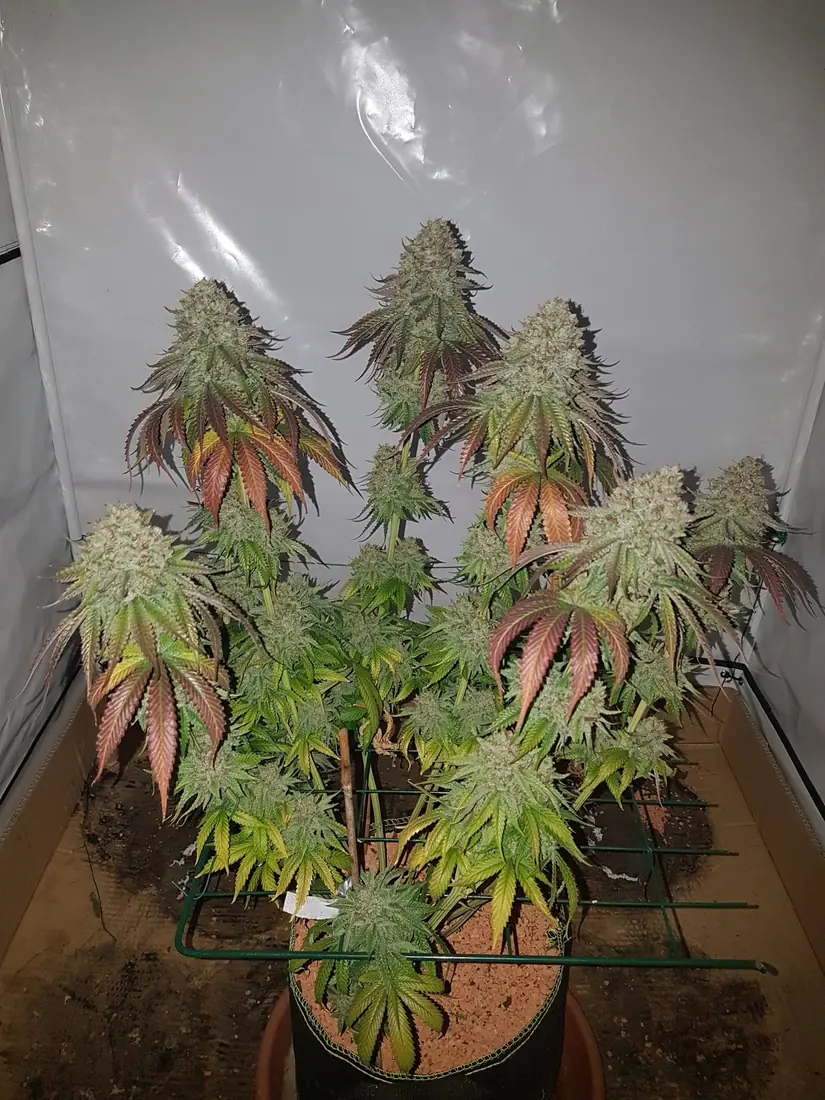
From Flo’s grow: Modern lines from Mango Kush & Blueberry to Grizzly Glue & Dos Si Dos 33
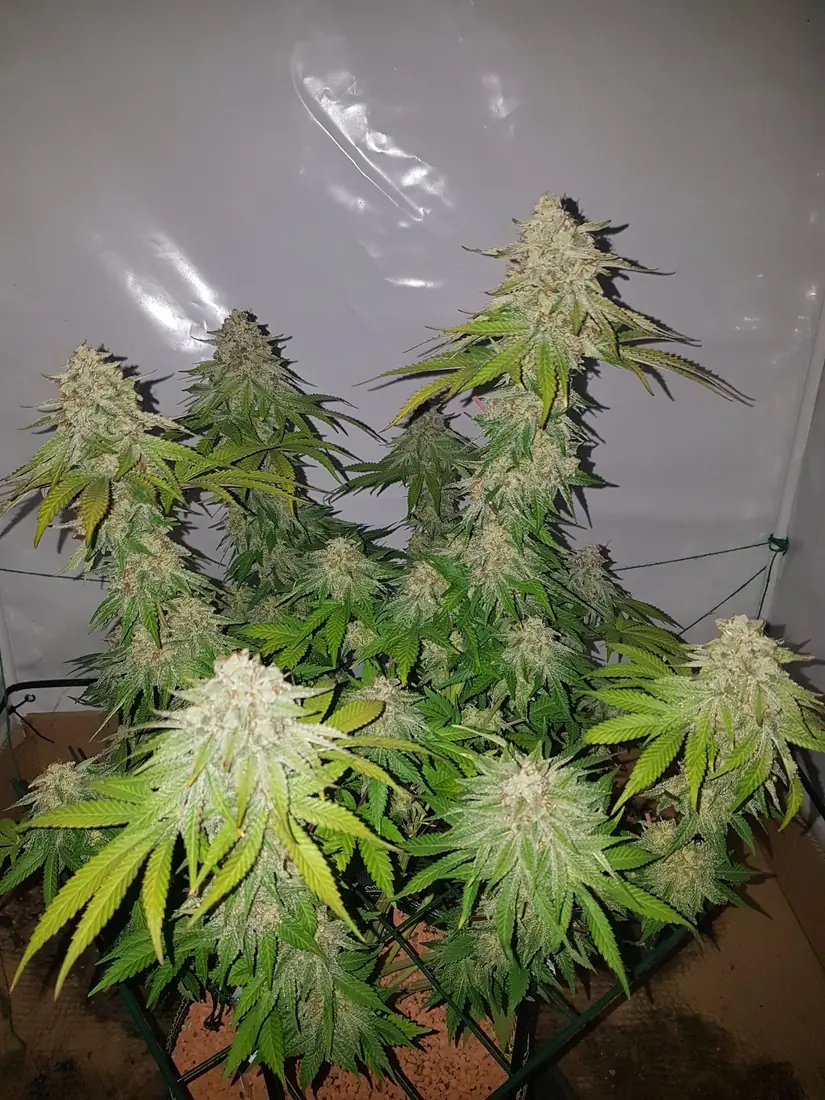
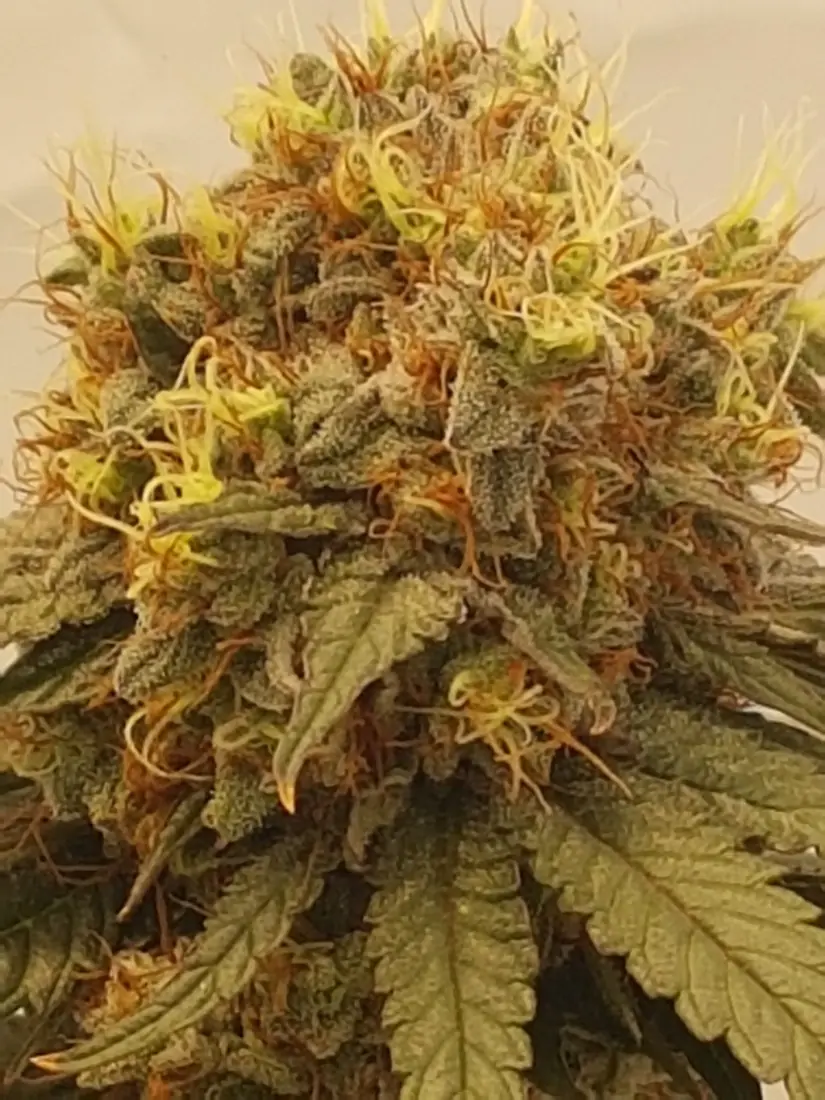
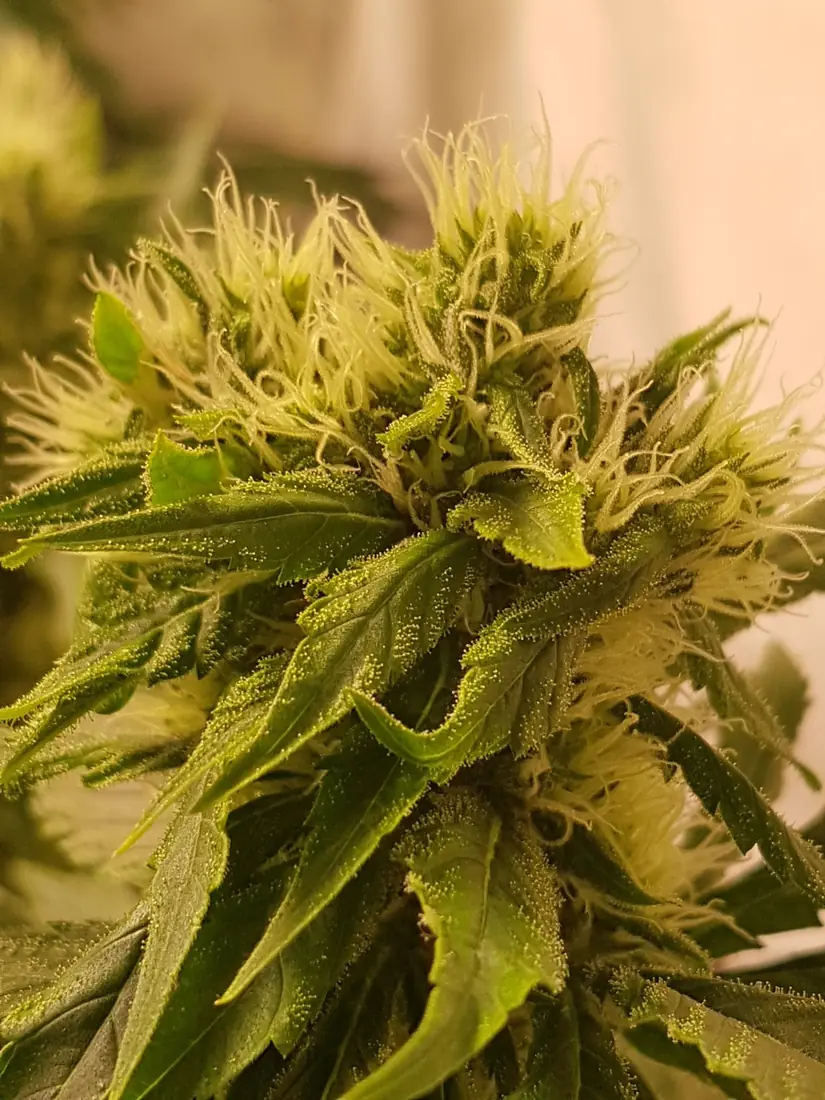
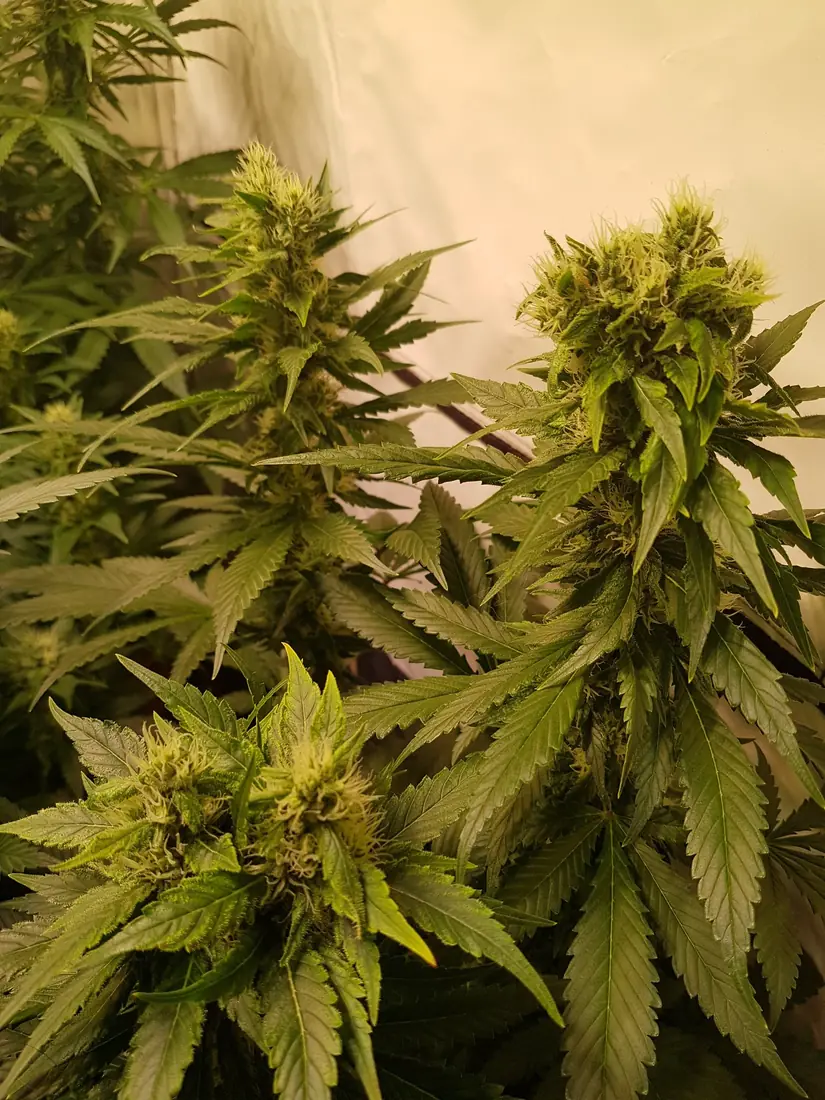
- Flo의 그로우에서: 2026년 10월 – 현재 사이클: Mango Kush, Lemon Cherry Gelato, Rainbow Sherbet, Blueberry, 거의 완성
- Flo의 그로우에서: 2026년 10월 – Grizzly Glue
- Flo의 그로우에서: 2025년 8월 – White Truffle(메인 버드), Red Hot Cookies, Dos Si Dos 33, 수지가 풍부
- Flo의 그로우에서: 2025년 8월 – White Truffle: 이 식물은 메인 버드가 모두 갈라졌다
C.1 Haze Lines – and Tiger Grande Dame Haze 🐾
🐾Haze Family Amnesia Haze · Super Lemon Haze · G13 Haze · MC Cooki G13
Modern Haze cultivars pair the classic terpinolene, limonene and β-caryophyllene bouquet of 1970s Haze with shorter flowering times and denser buds:[4][6]
- Amnesia Haze: 2000s Dutch classic combining Southeast Asian, Jamaican and Afghan lines; 10–12 weeks flowering, lime-incense-cedar bouquet (Chemotype I).
- Super Lemon Haze (SLH): Lemon Skunk × Super Silver Haze; 9–10 weeks flowering, responsive to LST and ScrOG, intense lemon zest and grapefruit aroma (Chemotype I).
- G13 Haze & Flo’s cross “MC Cooki G13” (→ The G13 Dossier: Myths & Genetics): In Flo’s own grow, G13 Haze was crossed with Red Hot Cookies to create MC Cooki G13, documented with a deep purple phenotype 1 and a green-orange phenotype 2 in the Gallery: From Flo’s grow.
Tiger connection 🐾: Flo’s almost 10-year-old black smoke Maine Coon Haze (“The grand dame” with her pearl necklace) is named after this classic family.
C.2 Cookie & Dessert Lines – and Tiger Tomcat Cookie 🐾
🐾Cookie & Dessert Family Girl Scout Cookies (GSC) · Wedding Cake · Gelato · Dos Si Dos · Red Hot Cookies
Originating in the San Francisco Bay Area around 2010 with Girl Scout Cookies (GSC) (OG Kush × F1 Durb), this family is characterised by a dominant triad of β-caryophyllene, limonene and linalool/humulene, dense trichome-coated calyxes and purple anthocyanin hues:[6]
- Girl Scout Cookies (GSC / Thin Mint / Forum Cut): 9–10 weeks flowering, sweet dough and mint-earth profile (Chemotype I).
- Wedding Cake (Triangle Mints #23) & LA Kush Cake: Triangle Kush × Animal Mints (8–9 weeks); the related LA Kush Cake (Wedding Cake × Kush Mints) is documented in Flo’s Oct 2026 run.
- Gelato (#33 / #41), Lemon Cherry Gelato & Rainbow Sherbet (RS11): Derived from Sunset Sherbet × Thin Mint GSC (8–9 weeks). Both Lemon Cherry Gelato and Rainbow Sherbet are featured in Flo’s grow gallery.
- Dos Si Dos (incl. Dos Si Dos 33) & Red Hot Cookies: GSC (OGKB) × Face Off OG (8–9 weeks); both Dos Si Dos 33 and Red Hot Cookies were documented in Flo’s 2025 grow.
Tiger connection 🐾: Flo’s ginger-tabby polydactyl Maine Coon tomcat Cookie (“The curious one” with extra toes) is named after the Cookie family.
C.3 Runtz & Z Lines – and Tiger Tomcat Runtz 🐾
🐾Runtz & Z Family Runtz (Zkittlez × Gelato) · White Runtz · Pink Runtz
Created in Los Angeles around 2017 by crossing Zkittlez with Gelato #33, the Runtz family combines β-caryophyllene, limonene and linalool with fruity esters:[6]
- Runtz (Original Runtz): Zkittlez × Gelato #33; 8–9 weeks flowering, colourful purple-and-lime foliage and sweet tropical fruit-candy aroma (Chemotype I; also documented in Flo’s photo series).
- White Runtz: Phenotype selected for its heavy white trichome blanket and creamy peach-citrus notes (8–9 weeks, Chemotype I).
- Pink Runtz: Selection displaying pink-to-magenta calyx hues and sweet berry-grapefruit aromatics (8–9 weeks, Chemotype I).
Tiger connection 🐾: Flo’s relaxed grey-and-white Maine Coon tomcat Runtz (“The sleepyhead” with his white chest and little straw hat) is named after this line.
C.4 Kush, Glue & Fruit Lines (incl. Flo’s Grow Documentation)
| Strain | Genetic Background | Growth & Flowering | Terpenes & Aroma | Notes / Documentation |
|---|---|---|---|---|
| Mango Kush | Mango × Hindu Kush | BLD-dominant, bushy, medium height · 8–9 wks | Myrcene, β-caryophyllene, α-pinene, humulene · ripe mango, pine, spicy Kush | Chemotype I · Documented in Flo’s Oct 2026 grow. |
| Critical (Critical Mass) | Afghani × Skunk #1[8] | Vigorous hybrid with very dense, heavy colas · 7–8 wks | Myrcene, β-caryophyllene, limonene · sweet citrus, skunk, wood | Chemotype I · Requires strong airflow in late flower to prevent grey mould (Botrytis).[13] |
| Gorilla Glue #4 (GG4 / Original Glue) & Grizzly Glue | Chem's Sister × Sour Dubb × Chocolate Diesel | Branchy, strong stretch, ideal for ScrOG · 8–9 wks | β-caryophyllene, myrcene, limonene, humulene · pine, sour earth, cocoa, diesel[6] | Chemotype I · Documented in Flo’s grow as Grizzly Glue on the trellis net. |
| Bruce Banner (#3) | OG Kush × Strawberry Diesel | Vigorous hybrid with large dense colas · 9–10 wks | Myrcene, β-caryophyllene, limonene, linalool · sweet berry meets OG/diesel[6] | Chemotype I · Combines classic OG/Diesel genetics with fruity strawberry notes. |
| Blue Dream | Blueberry × Haze | NLD-leaning, vigorous hybrid · 9–10 wks | Myrcene, α-pinene, terpinolene, β-caryophyllene · blueberry, pine, gentle Haze incense[6][12] | Chemotype I · Classic bridge hybrid between BLD berry lines and NLD Haze. |
| White Truffle & other strains from Flo’s grows | White Truffle (Gorilla Butter F2 = Peanut Butter Breath × GG4) · plus Eleven Roses, Tangerine Dream, Passion Fruits, Fruit Punch, Black Apple Hitchcock, Poison Envy | Modern BLD/NLD hybrids · 8–10 wks | From earthy-savory (White Truffle) to citrus-tropical (Tangerine Dream, Passion Fruits) | Chemotype I · Flo’s White Truffle (Aug 2025) exhibited split top buds on every branch (see Mutants & oddities). |
6. Category D: Classification by chemotype (Types I–V), morphology (BLD/NLD) & seed type
In plant science, Cannabis is classified independently of commercial names by its chemical phenotype (chemotype), a system introduced by Small & Beckstead (1973) and genetically elucidated by de Meijer et al. (2003) and Mandolino & Carboni (2004):[5][7][8]
| Chemotype | Cannabinoid Ratio | Genetic Basis (de Meijer et al. 2003 / Mandolino & Carboni 2004) | Typical Examples |
|---|---|---|---|
| Chemotype I THC-dominant |
High THCA/THC, very low CBDA/CBD (THC:CBD ratio typically > 5:1 to > 20:1) | Homozygous for functional THCA synthase[5] | Most classic and modern THC cultivars (Skunk #1, Original Haze, OG Kush, GSC, Runtz, GG4) and tropical NLD landraces. |
| Chemotype II THC/CBD-balanced |
Both THCA/THC and CBDA/CBD present in substantial amounts (often ~1:1 to 1:2) | Heterozygous for active THCA and CBDA synthases[5] | Traditional hashish landrace seed pools (e.g. Afghanistan, Pakistan, Morocco, Lebanon) and targeted 1:1 hybrids.[1][5] |
| Chemotype III CBD-dominant |
High CBDA/CBD, very low THCA/THC (< 0.3% to < 1%) | Homozygous for functional CBDA synthase[5] | European fibre and seed hemp (C. sativa subsp. sativa), wild populations and dedicated CBD cultivars. |
| Chemotype IV CBG-dominant |
CBGA/CBG accumulates as the main cannabinoid; trace THC/CBD | Inactivating mutation in downstream synthases so the precursor CBGA remains[7] | Specialised CBG cultivars (originally bred from French fibre hemp lines such as Santhica). |
| Chemotype V Cannabinoid-free |
Virtually undetectable cannabinoid levels | Blockade upstream of CBGA synthesis[7] | Specialised fibre and agricultural research lines. |
7. My strain profile template: how I document every strain
- Name & strain group: Landrace, historical milestone or modern line (Haze, Cookie, Runtz, Kush, etc.).
- Reported lineage: Clearly distinguishing documented breeding history from oral tradition.
- Morphology & seed type: BLD / NLD / hybrid; photoperiod (regular/feminised) or autoflower; stretch behaviour.
- Flowering window: Breeder specification compared against actual observed maturation via trichome inspection.
- Aroma & dominant terpenes: Sensory notes and assignment to known terpene clusters.
- Cultivation notes: Response to training (LST, topping, ScrOG), nutrient sensitivity and mould resistance.
My experience
For me, the high is only a minor bonus – my real passion is the living plant, its morphology and its terpenes. That is why my three Maine Coon cats are named after three iconic cultivar families: Haze, Cookie and Runtz!
When running several cultivars together in one tent (such as Mango Kush, Lemon Cherry Gelato, Rainbow Sherbet and Blueberry, or my own cross MC Cooki G13), I pair lines with similar stretch and flowering times, grow them in my custom Living Soil blend (soil, worm castings, sand and Seramis), hand-water every morning right after lights-on, and keep the canopy level using my Half-Pot + Topping + Adventitious Root method.
Note: personal experiences are subjective and are not a buying or consumption recommendation.
🌍 번역 안내: 이 글은 독일어 원문으로 작성되어 세심하게 번역되었습니다. 원어민 독자로서 더 자연스럽게 다듬을 수 있는 표현이나 식물학 전문 용어를 발견하셨다면 언제든 kontakt@igrowpedia.de 또는 X(@MisterSm3ilz420)로 알려주세요 — 도움을 주신 모든 분은 희망 시 언어 후원자 감사의 글에 소개해 드립니다!
출처
모든 링크는 2026년 10월 22일에 마지막으로 확인했습니다.
- Clarke RC, Merlin MD (2013): Cannabis: Evolution and Ethnobotany. University of California Press, Berkeley. doi:10.1525/9780520954571 리뷰
- McPartland JM (2018): Cannabis Systematics at the Levels of Family, Genus, and Species. Cannabis and Cannabinoid Research 3(1):203–212. doi:10.1089/can.2018.0039 리뷰
- Sawler J, Stout JM, Gardner KM et al. (2015): The Genetic Structure of Marijuana and Hemp. PLoS ONE 10(8):e0133292. doi:10.1371/journal.pone.0133292 유전 연구
- Watts S, McElroy M, Migicovsky Z et al. (2021): Cannabis labelling is associated with genetic variation in terpene synthase genes. Nature Plants 7(10):1330–1334. doi:10.1038/s41477-021-01003-y 유전 연구
- de Meijer EPM, Bagatta M, Carboni A et al. (2003): The inheritance of chemical phenotype in Cannabis sativa L. Genetics 163(1):335–346. doi:10.1093/genetics/163.1.335 교배 연구
- Smith CJ, Vergara D, Keegan B, Jikomes N (2022): The phytochemical diversity of commercial Cannabis in the United States. PLoS ONE 17(5):e0267498. doi:10.1371/journal.pone.0267498 시판 샘플 분석
- Mandolino G, Carboni A (2004): Potential of marker-assisted selection in hemp genetic improvement. Euphytica 140(1–2):107–120. doi:10.1007/s10681-004-4759-6 리뷰
- Small E (2015): Evolution and Classification of Cannabis sativa (Marijuana, Hemp) in Relation to Human Utilization. The Botanical Review 81(3):189–294. doi:10.1007/s12229-015-9157-3 리뷰
- Oswald IWH, Ojeda MA, Pobanz RJ et al. (2021): Identification of a New Family of Prenylated Volatile Sulfur Compounds in Cannabis Revealed by Comprehensive Two-Dimensional Gas Chromatography. ACS Omega 6(47):31667–31676. doi:10.1021/acsomega.1c04196 실험실 연구
- Konsumcannabisgesetz (KCanG), § 6 (Werbe- und Sponsoringverbot). gesetze-im-internet.de/kcang/__6.html 법률
- Leckie KM, Sawler J, Kapos P et al. (2024): Loss of daylength sensitivity by splice site mutation in Cannabis pseudo-response regulator. The Plant Journal 118(6):2020–2036. doi:10.1111/tpj.16726 유전 연구
- Schwabe AL, McGlaughlin ME (2019): Genetic tools weed out misconceptions of strain reliability in Cannabis sativa: implications for a budding industry. Journal of Cannabis Research 1:3. doi:10.1186/s42238-019-0001-1 유전 연구
- Punja ZK, Collyer D, Scott C et al. (2019): Pathogens and Molds Affecting Production and Quality of Cannabis sativa L. Frontiers in Plant Science 10:1120. doi:10.3389/fpls.2019.01120 연구