วิธีปลูกและการจัดทรงต้น: เปรียบเทียบ ScrOG, LST, Topping, HST, SOG และวัสดุปลูก
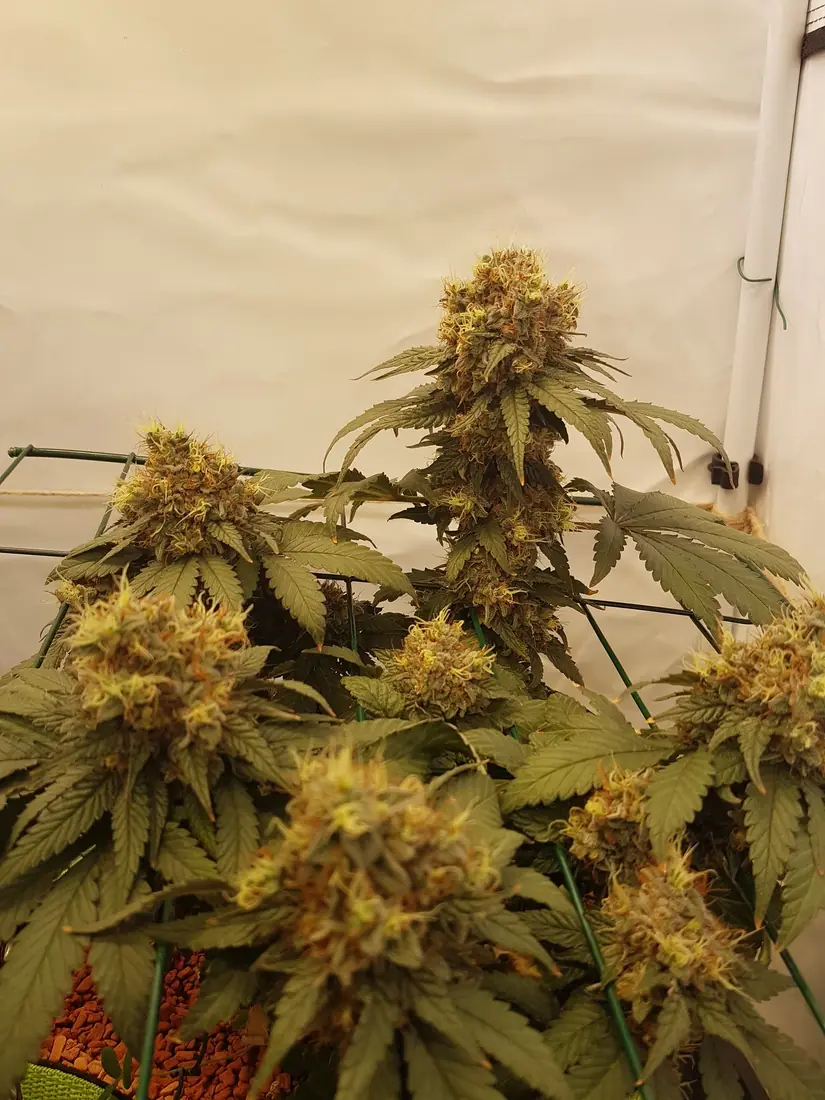
Why does an untrained cannabis plant naturally grow like a Christmas tree with one dominant central cola – and how can you guide it to form a flat, even canopy of uniform top buds instead? This guide covers all major plant-training and cultivation methods from LST and ScrOG to SOG, Topping, FIMming, Main-Lining, Supercropping and Lollipopping, as well as the main growing media (soil, coco coir, hydroponics) – separating peer-reviewed plant physiology from practical grower experience.
Legal framework for home growing in Germany (§ 3, § 9, § 10 KCanG): Adults (18+) in Germany may privately grow no more than three living cannabis plants at the same time at their place of residence (§ 9(1) KCanG) and possess up to 50 g of dried cannabis at home (§ 3(2) KCanG). Plants must be secured against access by third parties, especially minors (§ 10 KCanG).[10] Not legal advice.
1. Plant physiology: why training works (auxin & canopy light distribution)
Left untrained, Cannabis sativa exhibits strong apical dominance: the main shoot tip (apical meristem) produces the plant hormone auxin (indole-3-acetic acid, IAA), which travels downward and inhibits lateral axillary buds while root-derived cytokinins promote branching.[2][3] When the main apex is either bent below the level of the side branches (LST) or removed (topping), auxin inhibition is lifted and lateral shoots develop into co-dominant colas.[1][2]
Under stationary indoor LED fixtures, light intensity (PPFD in µmol·m⁻²·s⁻¹) drops rapidly with distance and canopy shading. Studies by Chandra et al. (2017) and Rodriguez-Morrison et al. (2021) show that photosynthesis and floral yield scale directly with local light interception.[4][5] A flat canopy keeps all main flower sites in the same optimal PPFD sweet spot.
2. Low-Stress Training (LST): gentle bending without tissue damage
In Low-Stress Training (LST), the main stem and taller branches are gently bent horizontally and anchored without cutting plant tissue.[9]
- When to start: Once the young plant has 3 to 5 nodes and the stem is still supple.
- Anchor the base: Tie a soft counter-tie near the base of the stem in the opposite direction so the root ball is not pulled loose.
- Bend and secure: Gently bend the top down to the level of the side shoots using soft coated plant wire or wide clips (never thin thread or bare wire that cuts into the stem).
- Maintain the canopy: Readjust ties every few days during vegetative growth and early flowering stretch.
Pros of LST
- No recovery pause from cutting wounds.
- Ideal for autoflowers: Because autoflowers have a fixed developmental clock ([8]), gentle LST is the safest way to increase bud sites and control height.
- Pots remain individually movable for watering and inspection.
Cons & limits
- Requires regular tie adjustments during vegetative growth and early stretch.
3. ScrOG (Screen of Green): maximum light efficiency with a horizontal net
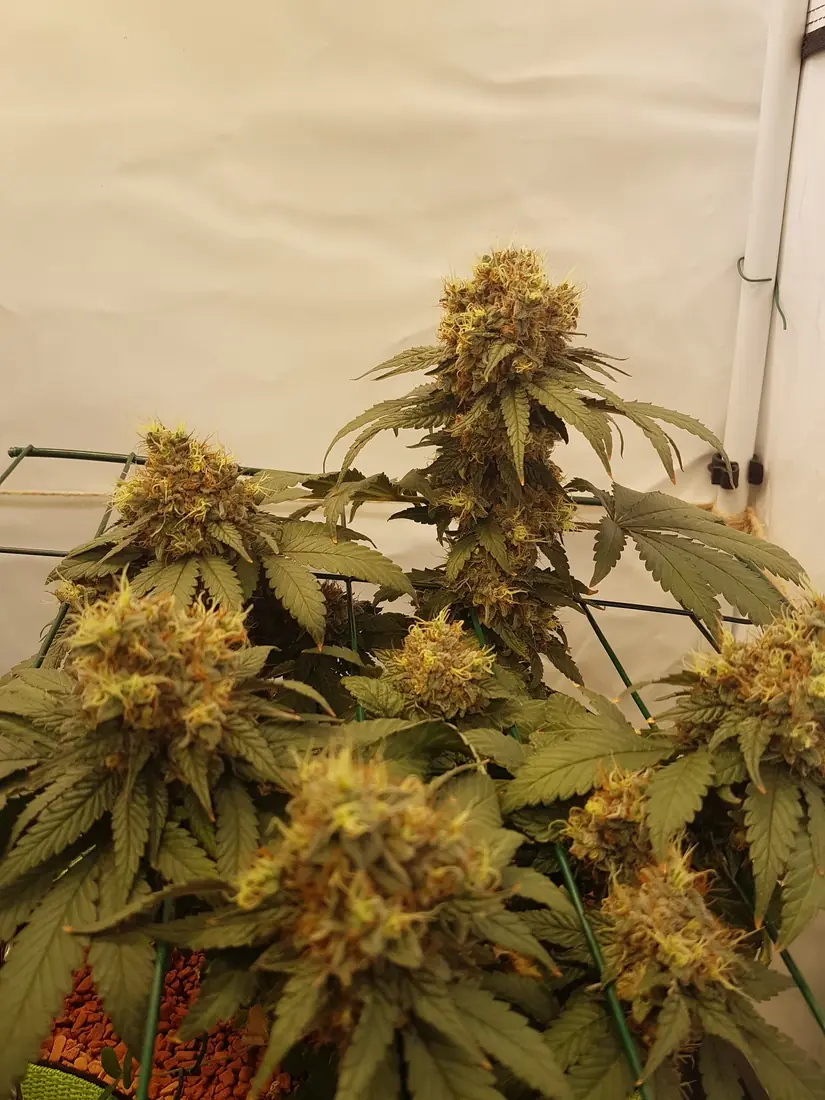
In a ScrOG (“Screen of Green”), a horizontal trellis net with ~5 × 5 cm to 8 × 8 cm mesh squares is mounted 20–35 cm above the pots. Growing shoots are woven (“tucked”) horizontally under the grid during late vegetative growth and the first two weeks of flowering until 60–80% of the screen is filled, creating a uniform carpet of colas.[9]
Pros of ScrOG
Cons
- Once woven into the net, plants cannot be removed from the tent – ensure easy access for watering and runoff removal.
- Requires 1–3 extra weeks of vegetative growth to fill the screen.
4. SOG (Sea of Green) – and why it rarely fits Germany’s 3-plant KCanG limit
SOG (“Sea of Green”) packs many small plants (typically 9–25 clones per m²) closely together with only 1–2 weeks of vegetative growth so each plant produces a single main cola.[9]
Why classic SOG does not fit private home growing in Germany (§ 9 KCanG): German law limits private cultivation to a maximum of 3 living plants per adult at their residence (and 50 g dried possession under § 3 KCanG).[10] A classic multi-plant SOG exceeds the 3-plant limit, making LST, topping and ScrOG far more practical for 1–3 plants.
5. High-Stress Training (HST): Topping, FIMming, Main-Lining & Supercropping
- Topping: Cleanly cutting off the main shoot tip above the 4th–6th node turns one apical shoot into two co-dominant main branches. In controlled experiments by Danziger & Bernstein (2021) and Bernstein et al. (2019), architecture manipulation increased floral uniformity and reduced cannabinoid gradients between upper and lower branches.[1][2]
- FIMming (“Fuck, I Missed”): Removing ~70–80% of the emerging apical tip while leaving the base of the meristem intact, often producing 3–4+ shoots from one cut.[9]
- Main-Lining / Manifolding: Repeated symmetrical topping (2 → 4 → 8 or 16 colas) combined with horizontal LST and clearing growth below the manifold hub; requires 2–4 extra vegetative weeks (photoperiod strains only).
- Supercropping: Gently rolling and softening the inner stem tissue between thumb and forefinger so an overly tall branch can be bent 90° without splitting the outer bark; forms a reinforced callus (“knuckle”).[9]
6. Lollipopping & Defoliation: air circulation vs. over-pruning
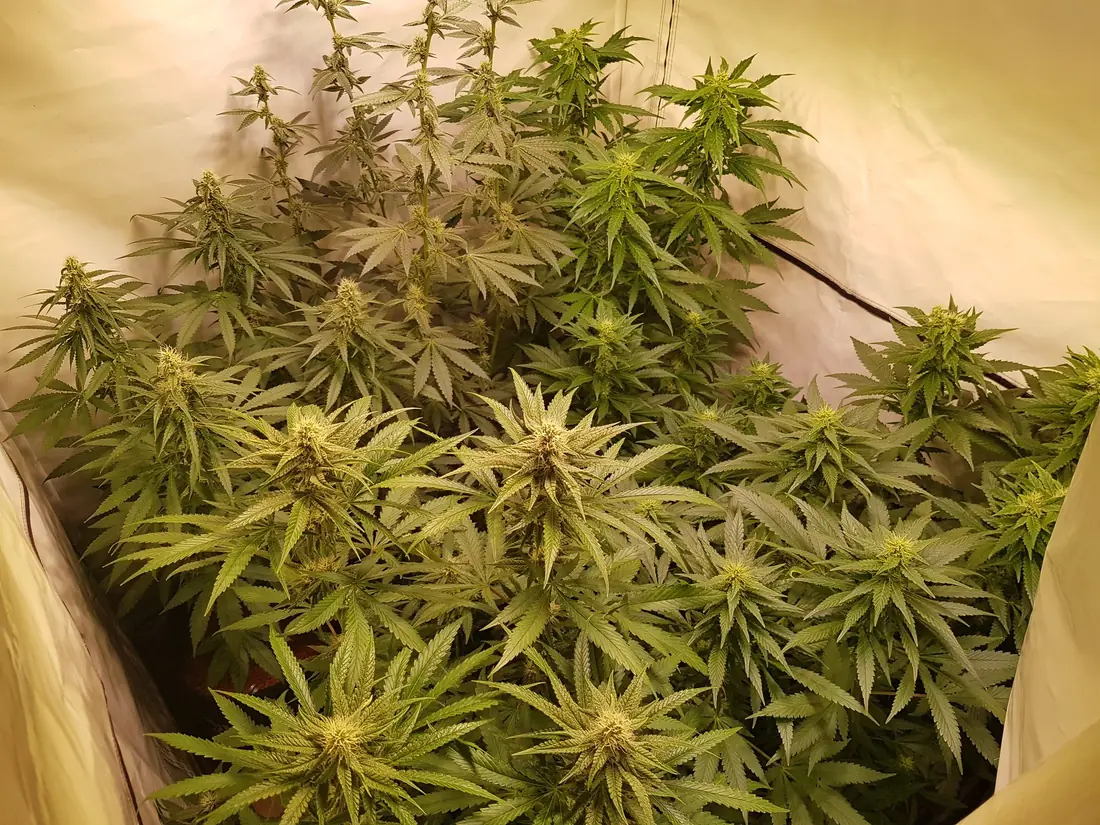
Lollipopping removes shaded lower shoots in the bottom third of the plant that would only form airy “popcorn buds”, while moderate defoliation removes overlapping leaves that trap humidity and promote grey mould (Botrytis cinerea) or powdery mildew.[1][7][11] However, healthy upper fan leaves are the plant’s primary photosynthetic organs and mobile nutrient reservoirs – stripping a plant bare stresses it and reduces photosynthesis.[1][4]
7. Growing media & systems: Soil (Living Soil vs. mineral), Coco Coir & Hydroponics
| Medium / System | How It Works | Buffer & Forgiveness | Key Research & Practical Notes |
|---|---|---|---|
| Organic Soil / Living Soil | Microbially active soil with humus, compost and mycorrhizae mineralising organic nutrients. | Very High (★★★★★) Best pH and nutrient buffer; ideal for beginners. |
Keep evenly moist without waterlogging.[7] |
| Mineral-fed Soil | Pre-fertilised potting mix supplemented with liquid mineral nutrients (N-P-K). | High (★★★★☆) Good buffer, fast deficiency correction. |
Yield increases with N and P only up to an optimum – excess causes salt build-up.[6] |
| Coco Coir | Inert, airy coconut-husk substrate holding both water and oxygen. | Medium (★★★☆☆) Passive hydro; requires feeding from day 1. |
Requires pH (5.8–6.2), EC and Ca/Mg management; use clean, pasteurised coir.[7] |
| Hydroponics (DWC, Ebb & Flow, Drip) | Roots suspended in aerated nutrient solution or inert media. | Low (★★☆☆☆) Fastest growth, zero buffer on pump or pH failure. |
Keep solution cool (< 21–22 °C) to prevent Pythium root rot.[6][7] |
8. Master comparison table of all methods
| Method | Principle | Stress Level | Extra Veg Time | Autoflower Suitability | Suitability for 1–3 Plants (§ 9 KCanG) |
|---|---|---|---|---|---|
| LST (Low-Stress Training) | Tying down stems horizontally without cutting | Low | None (0 days) | Excellent | Excellent (★★★★★) |
| ScrOG (Screen of Green) | Weaving shoots into a horizontal 5×5 cm mesh screen | Low–Medium | +1 to 3 weeks | Limited (vigorous autos only) | Excellent (★★★★★) |
| SOG (Sea of Green) | Many small plants packed closely, 1 main cola each | Low | Shortened (1–2 wks veg) | Yes in theory | Poor (★☆☆☆☆) due to 3-plant limit![10] |
| Topping | Cutting the main shoot tip above node 4–6 (1 → 2 main shoots) | Medium–High (HST) | +5 to 10 days | Only on very vigorous plants in week 2–3 | Very Good (★★★★★)[2] |
| FIMming | Partial pinch/cut across the apex (~75% removed, 1 → 3–4+ shoots) | Medium–High (HST) | +5 to 7 days | Not recommended | Good (★★★★☆) |
| Main-Lining / Manifolding | Repeated symmetrical topping + LST + lower clearing (8–16 colas) | High (HST) | +2 to 4 weeks | No | Very Good (★★★★☆) |
| Supercropping | Softening inner stem tissue & folding tall branches 90° | High (HST) | None (height control) | Emergency height control only | Good as height fix (★★★★☆) |
| Lollipopping & moderate defoliation | Removing shaded lower shoots & moisture-trapping leaves | Medium | None | Lightly only | Very Good vs. mould (★★★★★)[7] |
ประสบการณ์ของผม: เทคนิค “ปลูกครึ่งกระถาง + Topping + รากพิเศษ (Adventitious Roots)” ของ Flo
My guiding motto in the garden is: “Understand nature, then copy nature” (Kapier die Natur, dann kopier die Natur). That is why I combine topping with the plant’s natural ability to form adventitious roots (stem-borne roots) along a buried stem:
- Start at half pot height: I initially plant my young plants only halfway up the pot (filling the pot to 50% capacity with soil) and let them establish vigorously.
- Targeted topping above node 4 (or 5–6): Once the plant has developed its 4th node, I top the main apex to build 8 uniform main colas – or I wait until the 5th to 6th node if I want to use the excised top shoot as a cutting (clone) at the same time.
- Backfill the pot to the rim: Next, I fill the pot all the way to the top with fresh substrate so that the lower main stem and the lowest branch junctions are completely buried in soil.
- The dual botanical effect: Above ground, topping breaks apical dominance (routing root cytokinins into the lateral branches), while underground the buried stem and node bases dedifferentiate in the dark, moist medium to form a second tier of vigorous adventitious roots right beneath the main branches – massively expanding root volume and pumping far more water and nutrients into the 8 colas!
5. Flo’s Substrate Mix, Daily Lights-On Watering & Organic Feeding: I fill my pots with my own airy blend of soil, worm castings, quartz sand and Seramis clay granules enriched with Living Soil (Seramis buffers moisture and nutrients without waterlogging, while sand keeps drainage open). I hand-water daily shortly after the lights turn on (right when leaf stomata open – serving as my daily visual inspection of every plant!) and feed 100% biologically with worm tea and homemade fermented nettle manure (Brennnesseljauche) alongside strong intake, exhaust and canopy airflow.
Note: personal experiences are subjective and are not a recommendation.
🌍 หมายเหตุเกี่ยวกับคำแปล: บทความนี้เขียนต้นฉบับเป็นภาษาเยอรมันและแปลอย่างตั้งใจ หากคุณเป็นเจ้าของภาษาและพบสำนวนหรือศัพท์พฤกษศาสตร์ที่สามารถปรับปรุงให้ดีขึ้นได้ สามารถส่งข้อความหาเราได้ที่ kontakt@igrowpedia.de หรือทาง X (@MisterSm3ilz420) – ผู้ที่ช่วยเหลือทุกคนจะได้รับการระบุชื่อตามความประสงค์ในหน้าคำขอบคุณผู้อุปถัมภ์ด้านภาษาของเรา!
แหล่งอ้างอิง
ตรวจสอบลิงก์ทั้งหมดล่าสุดเมื่อวันที่ 22 ตุลาคม 2026
- Bernstein N, Gorelick J, Koch S (2019): Interplay between chemistry and morphology in medical cannabis (Cannabis sativa L.). Industrial Crops and Products 129:185–194. doi:10.1016/j.indcrop.2018.11.039 การศึกษาเชิงทดลอง
- Danziger N, Bernstein N (2021): Plant architecture manipulation increases cannabinoid standardization in ‘medical’ cannabis. Industrial Crops and Products 167:113528. doi:10.1016/j.indcrop.2021.113528 การศึกษาเชิงทดลอง
- Spitzer-Rimon B, Duchin S, Bernstein N, Kamenetsky R (2019): Architecture and Florogenesis in Female Cannabis sativa Plants. Frontiers in Plant Science 10:350. doi:10.3389/fpls.2019.00350 การศึกษา
- Chandra S, Lata H, Khan IA, ElSohly MA (2017): Cannabis sativa L.: Botany and Horticulture. In: Chandra S, Lata H, ElSohly MA (Hrsg.), Cannabis sativa L. – Botany and Biotechnology, S. 79–100. Springer, Cham. doi:10.1007/978-3-319-54564-6_3 บทความทบทวน
- Rodriguez-Morrison V, Llewellyn D, Zheng Y (2021): Cannabis Yield, Potency, and Leaf Photosynthesis Respond Differently to Increasing Light Levels in an Indoor Environment. Frontiers in Plant Science 12:646020. doi:10.3389/fpls.2021.646020 การศึกษาเชิงทดลอง
- Bevan L, Jones M, Zheng Y (2021): Optimisation of Nitrogen, Phosphorus, and Potassium for Soilless Production of Cannabis sativa in the Flowering Stage Using Response Surface Analysis. Frontiers in Plant Science 12:764103. doi:10.3389/fpls.2021.764103 การศึกษาเชิงทดลอง
- Punja ZK, Collyer D, Scott C et al. (2019): Pathogens and Molds Affecting Production and Quality of Cannabis sativa L. Frontiers in Plant Science 10:1120. doi:10.3389/fpls.2019.01120 การศึกษา
- Leckie KM, Sawler J, Kapos P et al. (2024): Loss of daylength sensitivity by splice site mutation in Cannabis pseudo-response regulator. The Plant Journal 118(6):2020–2036. doi:10.1111/tpj.16726 การศึกษาทางพันธุกรรม
- Cervantes J (2006): Marijuana Horticulture: The Indoor/Outdoor Medical Grower's Bible. Van Patten Publishing, Vancouver WA. ISBN 978-1878823236 บทความทบทวน
- Konsumcannabisgesetz (KCanG), §§ 3, 9, 10. § 3, § 9, § 10 บน gesetze-im-internet.de กฎหมาย
- Buirs L, Punja ZK (2024): Integrated Management of Pathogens and Microbes in Cannabis sativa L. (Cannabis) under Greenhouse Conditions. Plants 13(6):786. doi:10.3390/plants13060786 บทความทบทวน