种植基础:你的第一次种植
想第一次种植?太好了。这里是要点:室内还是室外、光照、基质、营养、浇水、植株的各个阶段,以及几乎每个人刚开始都会犯的错误。有研究的地方,我会附上链接;(目前)只有实践经验的地方,我也会说明。
德国法律框架简述(不是法律建议;法律文本于 2026 年 10 月 22 日在 gesetze-im-internet.de 核查;其他国家的规定不同,往往严格得多)[1]
- 最多 3 株:年满 18 岁的人可在住所或惯常居住地私人种植,同一时间合计不超过三株大麻(KCanG 第 9 条第 1 款)。
- 防止接触:大麻和繁殖材料(种子、插条)必须采取适当措施防止第三方接触,尤其是儿童和青少年(KCanG 第 10 条)。
- 禁止转让:私人种植的大麻不得转让给第三方(KCanG 第 9 条第 2 款)——送人也不行。
- 注意收获量:在家中合计最多只能持有 50 克干燥大麻(KCanG 第 3 条第 2 款)。
更多内容见德国法律。
室内还是室外?
| 室内(例如种植帐篷) | 室外(花园、阳台) | |
|---|---|---|
| 光照 | 时长和强度由你控制 | 免费的阳光,但日照长度由自然决定 |
| 开花 | 在你切换到短日照时开始[2] | “普通”品种在白天变短时开始[2];自动开花品种适合北方纬度[4] |
| 成本 | 设备和电费 | 低 |
| 防护(第 10 条) | 可使用上锁的柜子或房间 | 较难——植株同样必须防止他人接触 |
| 风险 | 高温、空气不流通、通风不足时发霉 | 天气、害虫、花序发霉[6] |
没有来源的行是实践经验上的考虑,不是研究结果。
光照
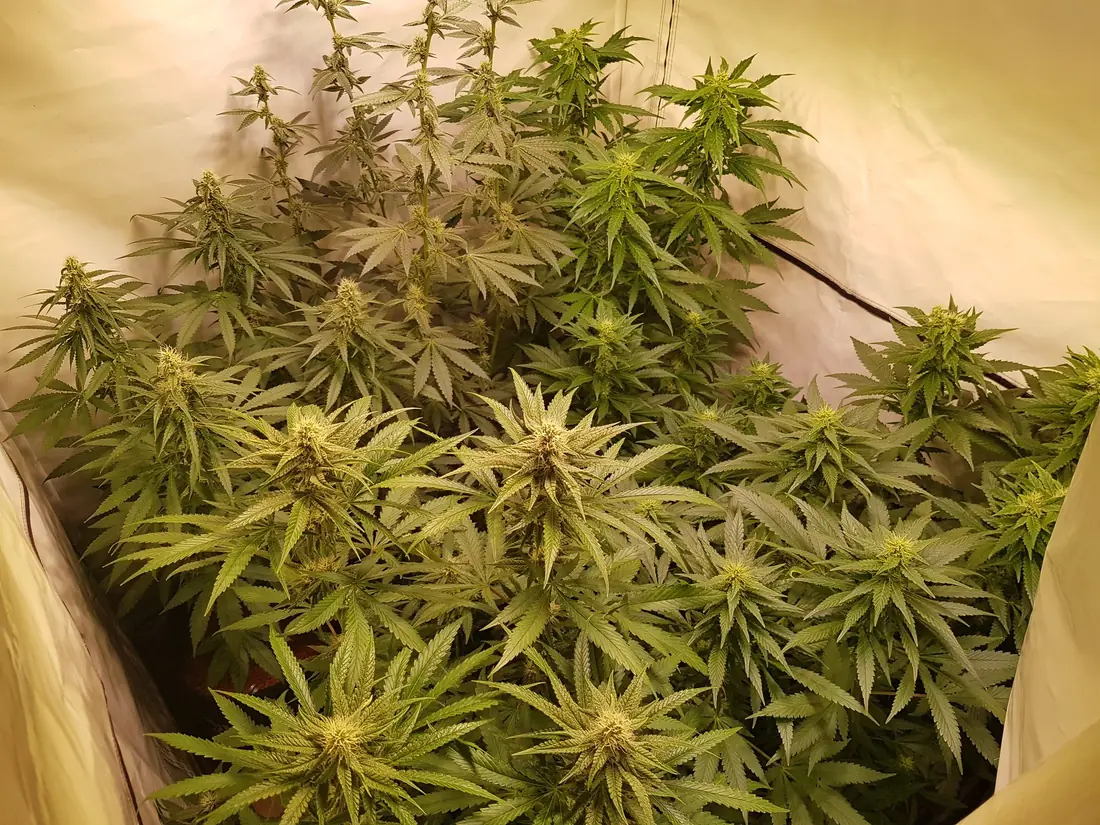
大麻是短日照植物:长日照促进生长,短日照触发开花。[2]因此室内种植通常分两个阶段。例如在一项研究中,植株先在 18 小时光照 / 6 小时黑暗下生长,然后在 12 / 12 小时下开花。[3] 自动开花品种不需要切换。[4]
选灯时不只看瓦数,更要看实际有多少光到达植株。这用 PPFD(单位:µmol/m²/s)来衡量——研究中引用的也是这个数值。[3]
📚 光照与光谱:流明(Lumen)代表什么?为什么室内用蓝/红/紫光代替阳光?底部补光真的有用吗?
基质:土壤、椰糠及其他
大致有三种方式(实践经验):土壤(最能容错,有时已含养分)、椰糠(透气,但需要精确施肥)和水培(根系在营养液中,可控性强,容错空间小)。Flo’s practical substrate mix: I blend my own airy medium from quality soil, worm castings (vermicompost), quartz sand and Seramis clay granules, enriched with Living Soil. Seramis stores moisture and nutrients without waterlogging, sand ensures lasting drainage and structure, and worm castings + Living Soil maintain an active soil microbiome.
来自研究的一点提示:未经巴氏消毒的椰糠中的真菌群落被描述为大麻植株上霉菌的可能来源。[6]
营养
三大主要营养元素是氮(N)、磷(P)和钾(K)。一项水培研究很有意思:花的产量随氮和磷增加,但只到计算出的最优值为止(再多也没用),而在测试范围内对钾完全没有反应。[5]
“越多越好”不适用于肥料。最好谨慎开始,并遵循包装上的说明。水培研究中的具体数值不能直接套用到土壤上。[5]
浇水
根腐病是大麻种植中最重要的病害之一[7]:在研究中,Fusarium(镰刀菌)和 Pythium(腐霉)等真菌和卵菌导致根部变褐、生长受阻、叶片发黄,有时甚至植株死亡。[6]专家提到的预防措施包括卫生、良好的浇水管理和室内环境控制。[7]
实践经验(未经研究):许多种植者只在基质表层稍微变干时才浇水,并确保多余的水能排出。Flo’s watering & feeding routine: I hand-water daily shortly after the lights turn on – first, because plants open their stomata at the start of the light period when transpiration demand peaks, and second, as a deliberate daily inspection walk: automatic irrigation is convenient, but hand-watering every morning lets you spot the tiniest change in leaves, shoots and soil immediately! Following my motto “Understand nature, then copy nature”, I feed 100% biologically with worm tea (vermicompost liquid) and homemade fermented nettle manure (Brennnesseljauche) (rich in plant-available N, K, iron and silica) alongside strong continuous intake, exhaust and circulation airflow.
种植的各个阶段
- 发芽:种子裂开,胚根长出。Flo 的实战技巧:室外种植和自动开花品种我直接播入土壤或 Jiffy 育苗块中发芽;室内光周期品种则先在温水中短暂浸种,随后放在两个盘子之间的湿布/湿纸巾中或带盖密封盒内,置于温暖处(22–25 °C)直至露白——详见种子保存与科学催芽指南。
- 幼苗:长出第一批叶子;此时植株还很娇嫩。
- 营养生长期:在长日照下,植株长高长宽。[2]
- 开花期:在短日照下(自动开花品种则自行)形成花序。[2][4]使用常规种子时,最迟到这时就能看出哪些是雄株。
- 收获、干燥与熟化:I determine peak harvest timing with a 60× loupe directly on the calyx trichomes (~75–85% milky, 15–25% amber – see Trichome Guide), followed by slow dark drying at 18–20 °C and 55–60% RH with gentle airflow (10–14 days) and curing in airtight glass jars at 58–62% RH to preserve volatile terpenes.
各阶段持续多久很大程度上取决于品种、种子类型和条件。In botanical literature (Clarke & Merlin 2013; McPartland & Small 2020), flowering duration ranges from 7–9 weeks in compact mountain BLD/Indica lines and 9–11 weeks in modern hybrids to 11–16+ weeks in equatorial NLD/Sativa landraces.[9]
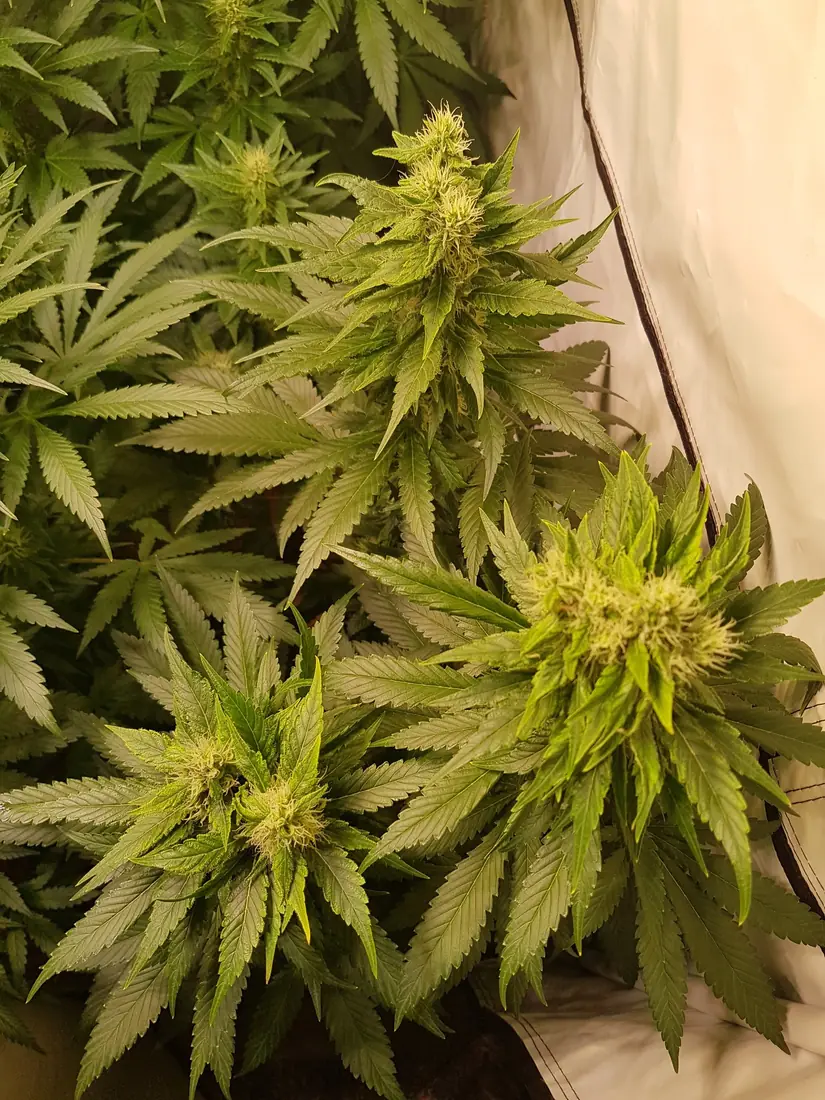
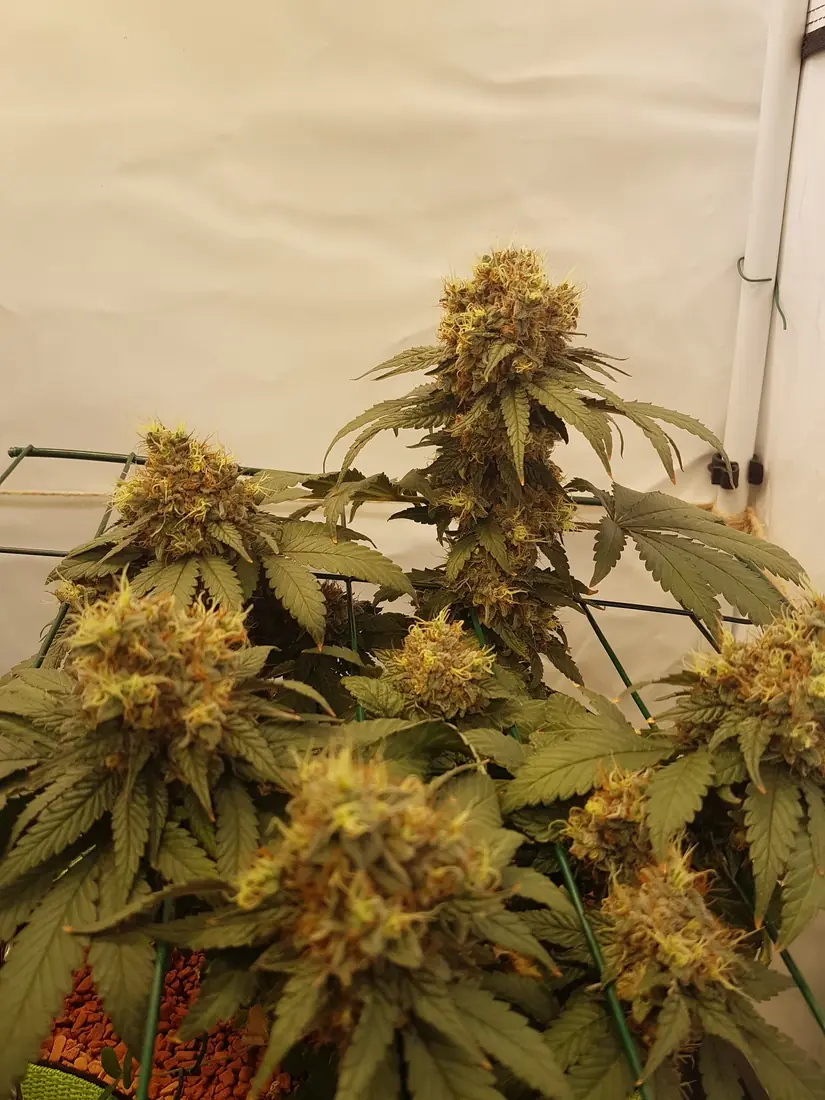
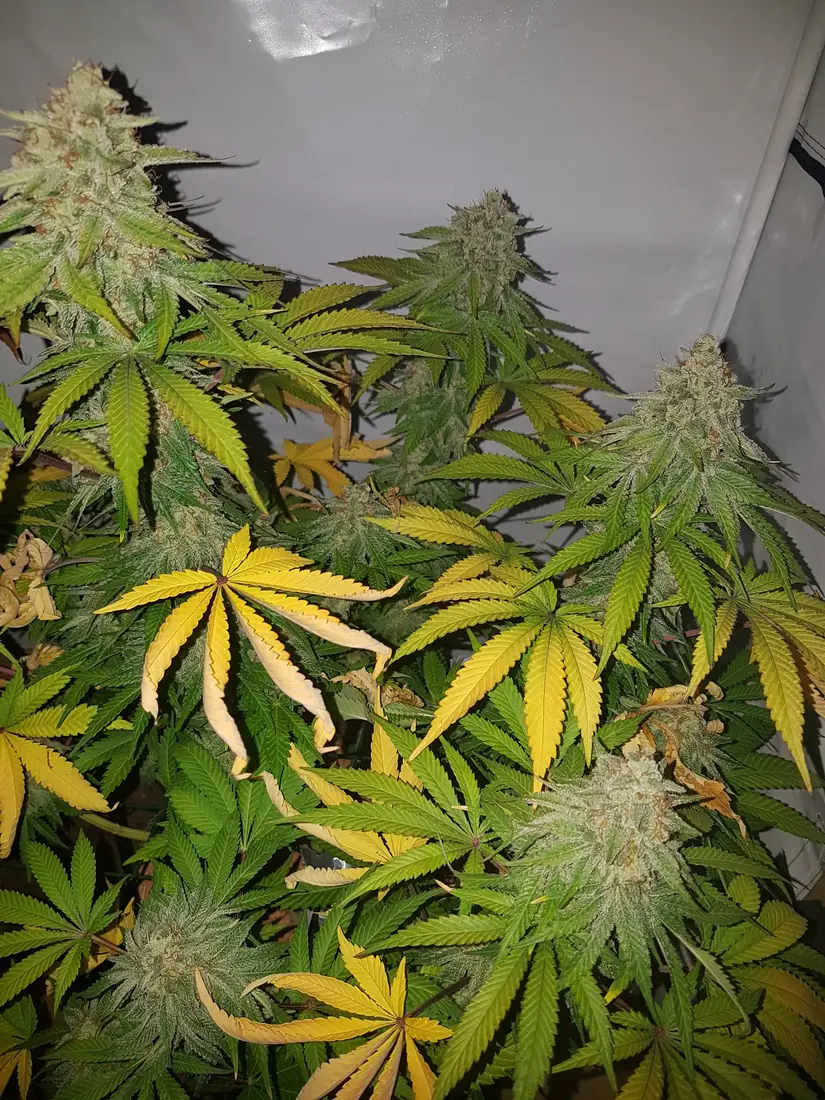
来自 Flo 的种植:从开花初期到收获前不久
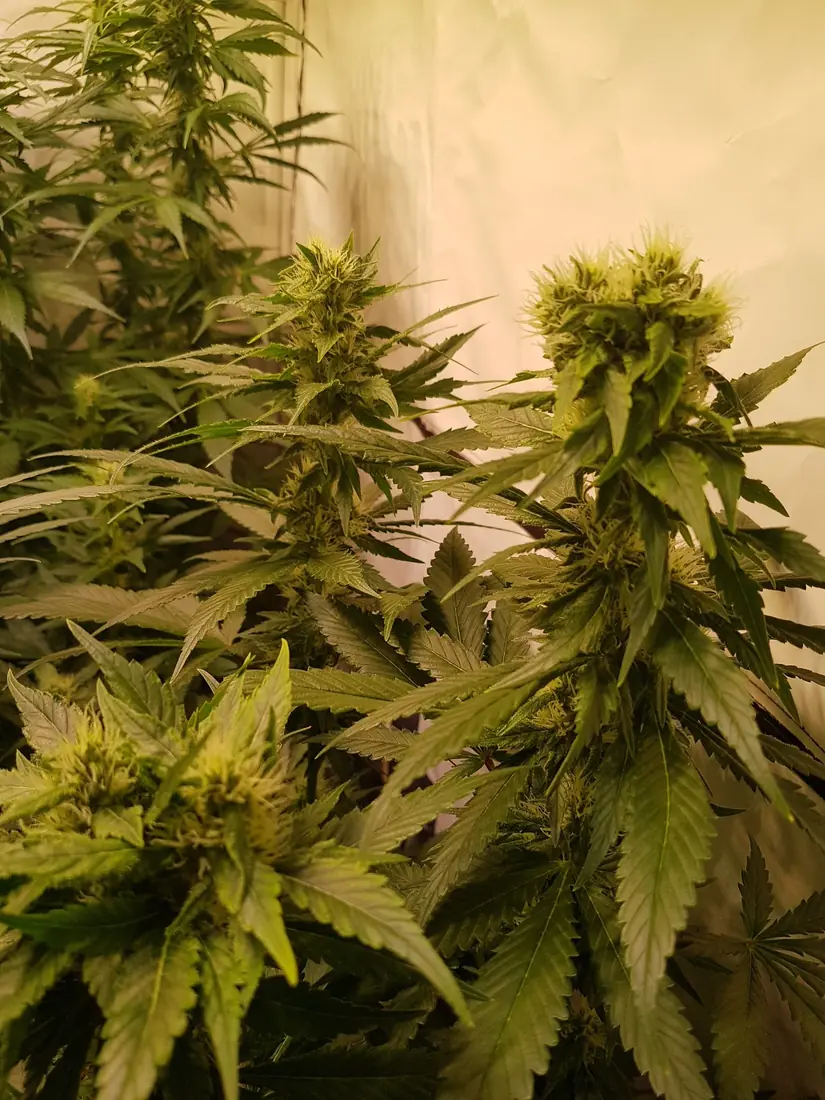
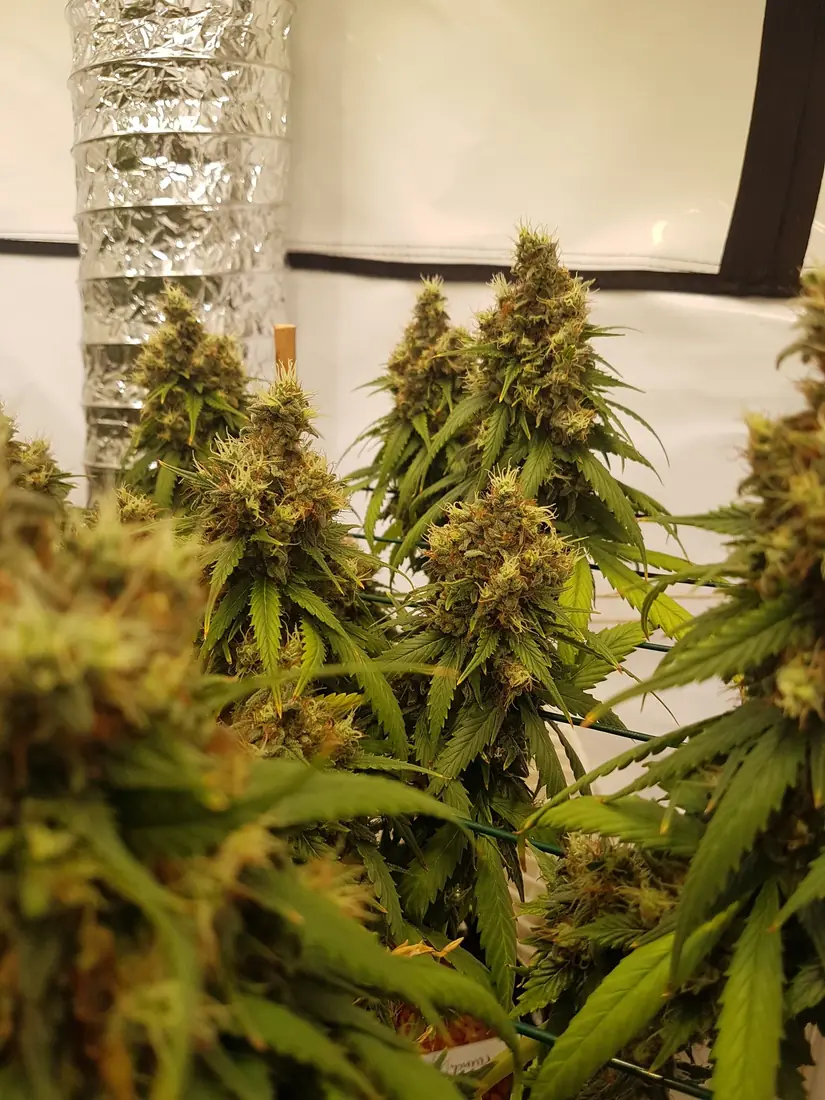
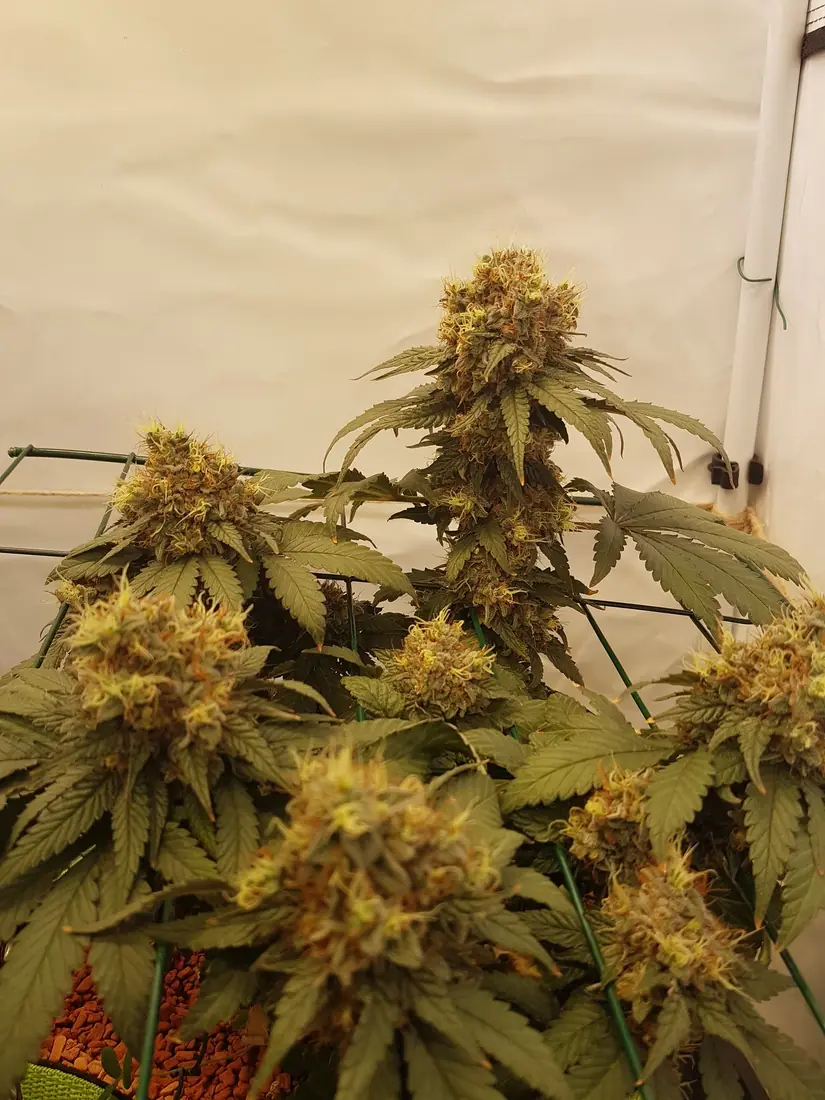
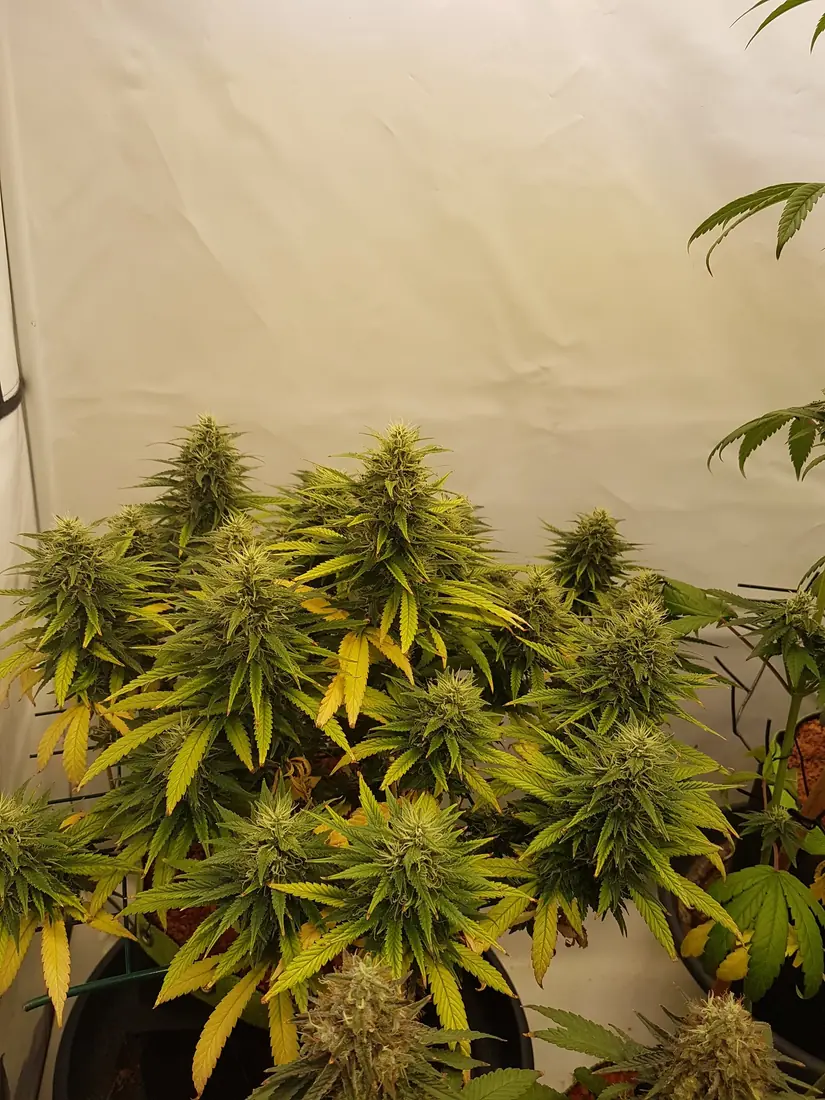
- 来自 Flo 的种植:2025 年 8 月——开花第 3 周开始,有一个树脂特别多的 Red Hot Cookies 表型
- 来自 Flo 的种植:2025 年 8 月——White Truffle:这株的每个主花都分叉了
- 来自 Flo 的种植:2025 年 8 月——Fruit Punch 和 Black Apple Hitchcock,收获前一周
- 来自 Flo 的种植:2026 年 10 月——当前批次,有 Mango Kush、Lemon Cherry Gelato、Rainbow Sherbet 和 Blueberry,即将完成
- 来自 Flo 的种植:2025 年 8 月——Black Apple Hitchcock、Fruit Punch 和 Passion Fruits,可以收获了
常见新手错误
| 错误 | 为什么是问题 |
|---|---|
| 施肥过多 | 在一项研究中,产量只增加到最优值为止。[5] → 缺素与病虫害 |
| 积水 | Pythium 和 Fusarium 引起的根腐病是众所周知的问题。[6][7] |
| 低估霉菌 | 在一项研究中,白粉病是叶片上最重要的病原;在花序上还检测到 Botrytis 和 Penicillium 引起的腐烂等。[6] → 缺素与病虫害 |
| 忽视雄株 | 使用常规种子时,雄株可能给雌株授粉。[8] |
| 无计划地切换光照 | 切换时机对产量和成分含量的影响方向不同。[2] |
| 忘记法律 | 安全存放植株和种子(第 10 条),收获后注意 50 克的持有上限(第 3 条),不转让任何东西(第 9 条)。[1] |
更多关于营养缺乏、害虫和真菌病害的内容,请见分类缺素与病虫害。
My experience
For me, growing is all about the living plant and its botany rather than chasing a high. Three habits make the biggest difference in my garden:
- Hand-watering daily right after lights-on: As soon as the lamps switch on, leaf stomata open and transpiration begins. Watering by hand every morning instead of relying on blind automation forces me to inspect every single plant closely each day.
- Custom substrate & organic feeding: I mix soil, worm castings, sand and Seramis clay granules enriched with Living Soil, and feed biologically with worm tea and homemade fermented nettle manure (Brennnesseljauche) under strong intake, exhaust and canopy airflow.
- KCanG compliance (§ 9 & § 10 KCanG): Living as three adults in our multi-generational home, we strictly respect the 3-plant-per-adult limit and keep our grow room locked against third-party access.
Note: personal experiences are subjective and are not a recommendation.
🌍 译文说明:本文原文以德语撰写并经过认真翻译。如果您是母语读者,发现某处表述或植物学专业术语可以进一步优化,欢迎发送邮件至 kontakt@igrowpedia.de 或在 X(@MisterSm3ilz420)上告诉我们——所有协助校对的朋友均可根据意愿载入我们的语言共建者致谢榜!
来源
所有链接最后核查于 2026 年 10 月 22 日。
- Konsumcannabisgesetz (KCanG), §§ 3, 9, 10. § 3, § 9, § 10,见 gesetze-im-internet.de 法律
- Dang M, Arachchige NM, Campbell LG (2022): Optimizing Photoperiod Switch to Maximize Floral Biomass and Cannabinoid Yield in Cannabis sativa L.: A Meta-Analytic Quantile Regression Approach. Frontiers in Plant Science 12:797425. doi:10.3389/fpls.2021.797425 荟萃分析
- Rodriguez-Morrison V, Llewellyn D, Zheng Y (2021): Cannabis Yield, Potency, and Leaf Photosynthesis Respond Differently to Increasing Light Levels in an Indoor Environment. Frontiers in Plant Science 12:646020. doi:10.3389/fpls.2021.646020 实验研究
- Leckie KM, Sawler J, Kapos P et al. (2024): Loss of daylength sensitivity by splice site mutation in Cannabis pseudo-response regulator. The Plant Journal 118(6):2020–2036. doi:10.1111/tpj.16726 遗传学研究
- Bevan L, Jones M, Zheng Y (2021): Optimisation of Nitrogen, Phosphorus, and Potassium for Soilless Production of Cannabis sativa in the Flowering Stage Using Response Surface Analysis. Frontiers in Plant Science 12:764103. doi:10.3389/fpls.2021.764103 实验研究
- Punja ZK, Collyer D, Scott C et al. (2019): Pathogens and Molds Affecting Production and Quality of Cannabis sativa L. Frontiers in Plant Science 10:1120. doi:10.3389/fpls.2019.01120 研究
- Buirs L, Punja ZK (2024): Integrated Management of Pathogens and Microbes in Cannabis sativa L. (Cannabis) under Greenhouse Conditions. Plants 13(6):786. doi:10.3390/plants13060786 综述
- Timoteo Junior AA, Oswald IWH (2024): Optimized guidelines for feminized seed production in high-THC Cannabis cultivars. Frontiers in Plant Science 15:1384286. doi:10.3389/fpls.2024.1384286 综述
- Clarke RC, Merlin MD (2013): Cannabis: Evolution and Ethnobotany. University of California Press, Berkeley / McPartland JM, Small E (2020): A classification of endangered high-THC cannabis (Cannabis sativa subsp. indica) domesticates and their wild relatives. PhytoKeys 144:81–112. doi:10.3897/phytokeys.144.46700 综述