Cannabinoids: THC, CBD, CBG & co. – what they do
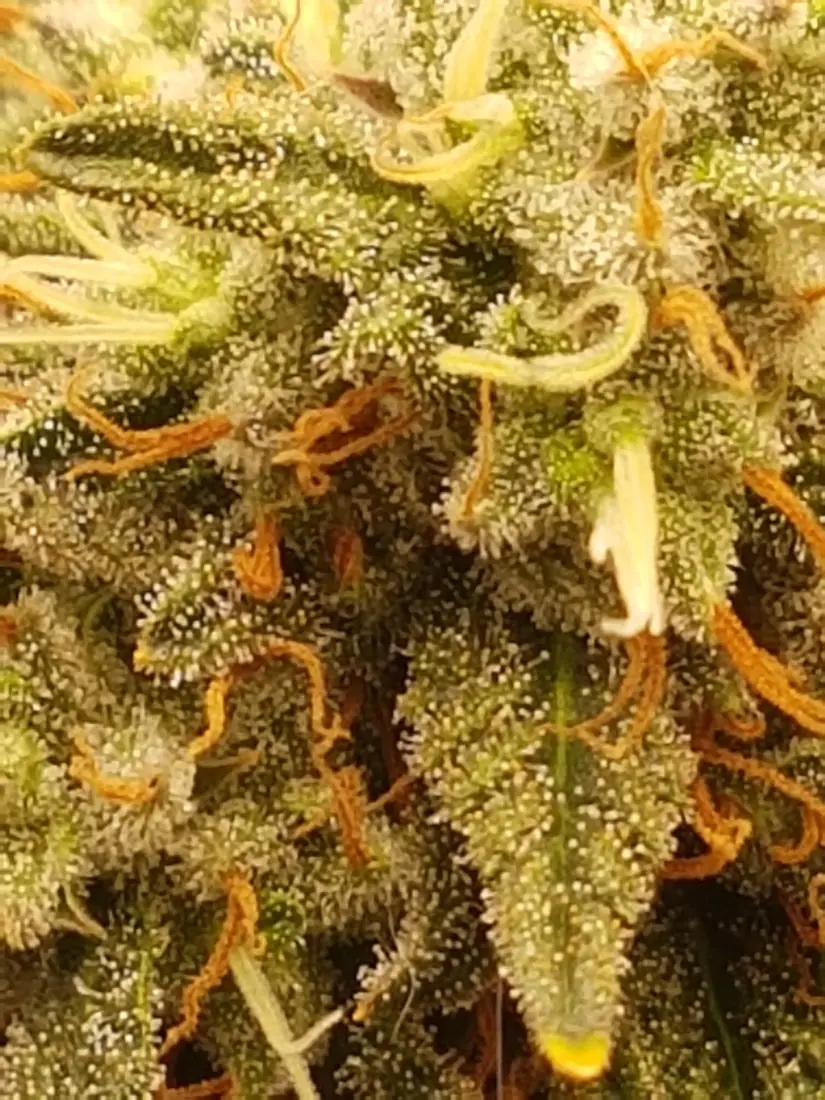
Once you get into cannabis, you quickly stumble over abbreviations like THC, CBD, CBG or CBN. In this article I explain what is behind the most important cannabinoids, what research knows about their effects – and where a lot is still open.
Important: this article is for information only and is not medical advice. No promises of cure are made here. If you take medication or have health questions, please talk to your doctor or pharmacist.
What are cannabinoids anyway?
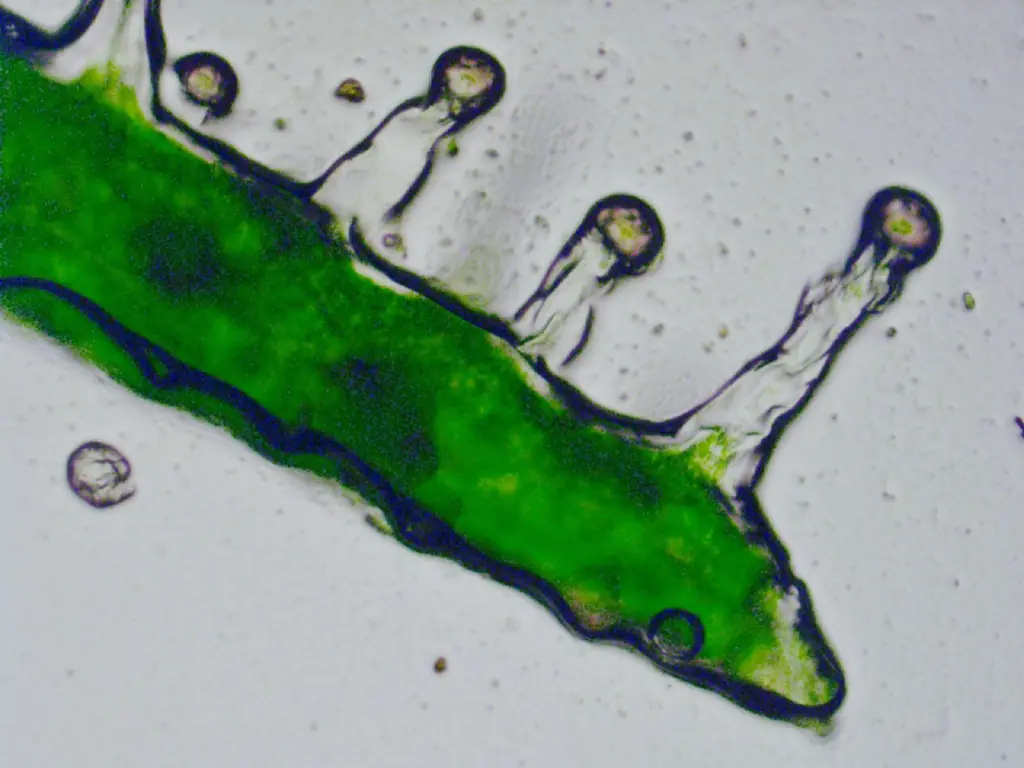
Cannabinoids are a group of substances that can interact with the endocannabinoid system. Your body has this system anyway: it makes its own messengers (endocannabinoids) that dock onto receptors. The best known are the CB1 receptor, found mainly in the nervous system, and the CB2 receptor, which plays a role mainly in the immune system.[1]
The cannabis plant produces more than 100 different so-called phytocannabinoids (i.e. plant cannabinoids). The starting material for most of them is cannabigerolic acid (CBGA): the plant uses enzymes to convert it into THCA, CBDA and CBCA.[2] Which of them are formed, and in what amounts, depends mainly on the plant’s genetics.
Acid forms: why raw flowers hardly get you high
In the living plant, cannabinoids are mostly present as acids – THCA instead of THC, CBDA instead of CBD. Only heat (e.g. when smoking, vaporising or heating) splits off part of the molecule. This process is called decarboxylation; only then is intoxicating THC formed in larger quantities. How fast this happens depends on temperature and time and differs between the individual acids.[3]
Legal note (Germany): in Germany, extracting cannabinoids from the plant is prohibited – extraction of CBD, among others, is exempt (§ 2(2) KCanG).[13] More under Legal matters in Germany.
THC Δ9-tetrahydrocannabinol
THC is the main intoxicating component of cannabis. It acts as a so-called partial agonist at the CB1 and CB2 receptors – it activates them, but not to the maximum. How strong the effect is depends, among other things, on how many receptors are present. With regular use, tolerance can develop.[1]
Well established
- THC is responsible for the typical high.[1]
- In a controlled study, a dose of just 10 mg of inhaled THC in occasional users briefly impaired word recall and temporarily triggered psychosis-like symptoms.[5]
- In 2017 the US National Academies found substantial evidence that cannabis or cannabinoids can be effective in adults with chronic pain, as can oral cannabinoids for chemotherapy-induced nausea and vomiting and for patient-reported spasticity in multiple sclerosis.[4]
Risks & limitations
- In a large European case-control study, daily use was associated with roughly 3 times, and daily use of high-potency cannabis (≥ 10 % THC) with almost 5 times the risk of a psychotic disorder – compared with people who had never used. Studies like this show an association, but on their own do not prove causation.[6]
- The National Academies report rates the effect on pain as rather modest and dates from 2017; it is based on studies with defined preparations and doses – the results cannot simply be transferred to any flower.[4]
CBD cannabidiol
CBD is the second major cannabinoid and does not get you high the way THC does. Exactly how it works in the body has not been fully clarified: in the lab, CBD is surprisingly potent at blocking the activation of CB1 and CB2 receptors by other substances, and it also acts on further targets outside the endocannabinoid system.[1]
Well established
- Highly purified CBD is approved as a prescription medicine: in the US since 2018 (Epidiolex) for treating seizures in Lennox-Gastaut and Dravet syndrome[7], in the EU since 2019 (Epidyolex) as an add-on treatment for these two rare forms of epilepsy; tuberous sclerosis complex was added later.[8] This was based on randomised, placebo-controlled trials.
- CBD has side effects too. In the approval studies these included sleepiness, raised liver enzymes, decreased appetite, diarrhoea, rash and sleep problems.[7]
- In a randomised trial, CBD at common ratios (1:1 to 3:1 relative to THC) did not reduce the short-term negative effects of THC on memory and psychosis-like symptoms.[5]
Myth: “Lots of CBD in a strain makes THC harmless” – according to current knowledge there is no good evidence for that. The authors of the study mentioned suspect that if high-CBD products cause fewer problems, it is more likely because they contain less THC.[5]
CBG cannabigerol
CBG is the non-acidic form of CBGA, the “mother” of most other cannabinoids. Because the plant normally converts most of its CBGA further, most strains contain only little of it. At the cannabinoid receptors, CBG’s properties lie between those of THC and CBD; it also acts at receptors that play a role for the messenger serotonin, for example (5-HT1A).[2]
Well established
- Role as a precursor in the plant’s biosynthesis.[2]
Preliminary
- Lab and animal studies point to possible potential in neurological and inflammatory diseases and to antibacterial properties – robust human studies are still largely missing.[2]
- The authors of a review stress that CBG is already being marketed although it has hardly been studied compared with CBD.[2]
CBN cannabinol
CBN is not made directly by the plant; it forms as an oxidative breakdown product of THC.[11] It is known mainly because it is marketed as the “sleep cannabinoid”.
Well established
- Formed by oxidation of THC.[11]
Preliminary
- A 2021 review found insufficient evidence for the popular claims about its effect on sleep.[10]
- A small study (20 adults with insomnia, one night per condition) found in 2026 no significant difference from placebo for the primary outcome – wake time after sleep onset. At the high dose (300 mg) some secondary outcomes, such as time to fall asleep, improved. The researchers call for larger and longer studies.[11]
THCV Δ9-tetrahydrocannabivarin
THCV is chemically closely related to THC but behaves differently pharmacologically: in the lab it partially activates the CB2 receptor and can block the action of other substances at the CB1 receptor. In animal studies the effect depends on the dose – at low doses rather blocking, at higher doses rather activating at the CB1 receptor.[1]
Well established
- Basic receptor pharmacology from lab and animal studies.[1]
Preliminary
- Statements about effects in humans: Initial controlled human trials are now available: in a randomised, double-blind, placebo-controlled pilot trial in 62 patients with type 2 diabetes (Jadoon et al. 2016, Diabetes Care), THCV (5 mg twice daily for 13 weeks) significantly decreased fasting plasma glucose and improved pancreatic beta-cell function.[14] Furthermore, Englund et al. (2016, Journal of Psychopharmacology) studied 10 mg THCV in healthy volunteers, and Tudge et al. (2015, Int. J. Neuropsychopharmacol.) demonstrated via human fMRI that THCV modulates neural reward and food-cue processing.[14] Initial human trials
The “entourage effect”
The idea: cannabinoids and terpenes (aroma compounds) act differently together – possibly better – than each substance on its own. The hypothesis became popular partly through a 2011 review by Ethan Russo, who himself calls for controlled studies to test it.[12] hypothesis
A direct test of the CBD + THC combination was sobering: at common ratios, CBD did not measurably change the effects of THC.[5] That does not disprove every form of interplay, but it shows that the term is often used far more confidently in everyday life than the data allow.
From Flo’s grow: resin up close
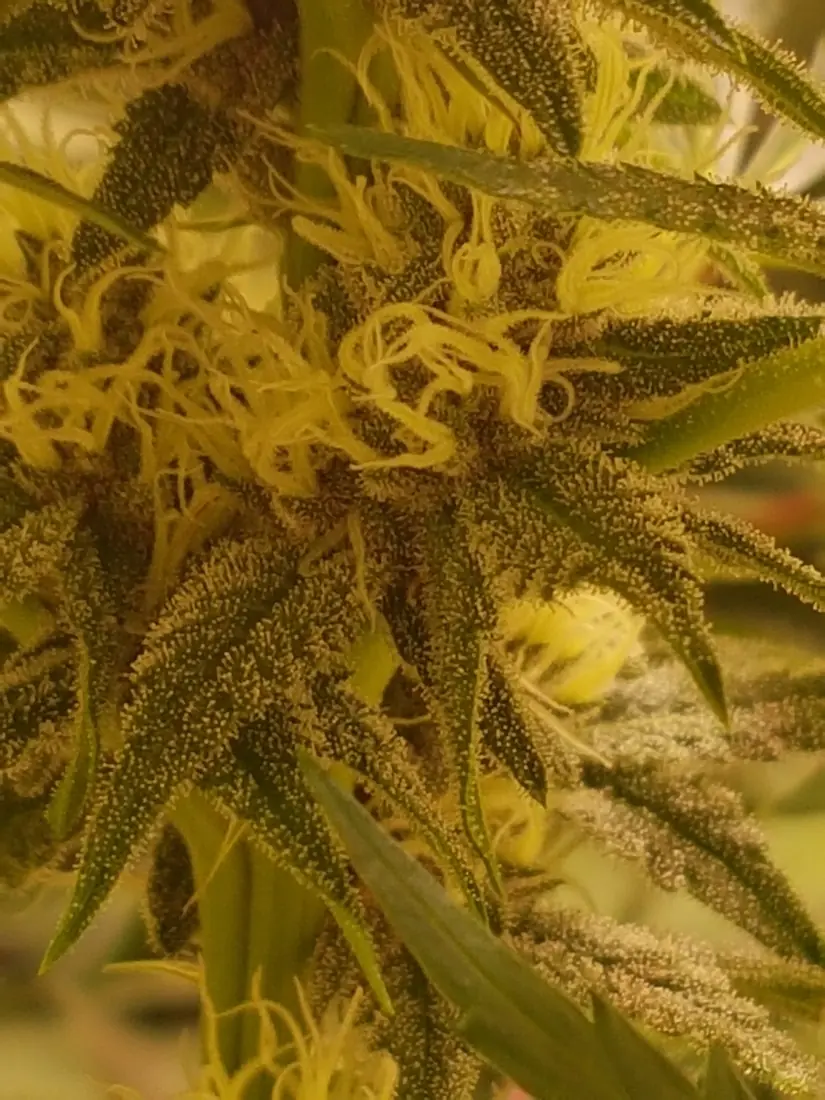
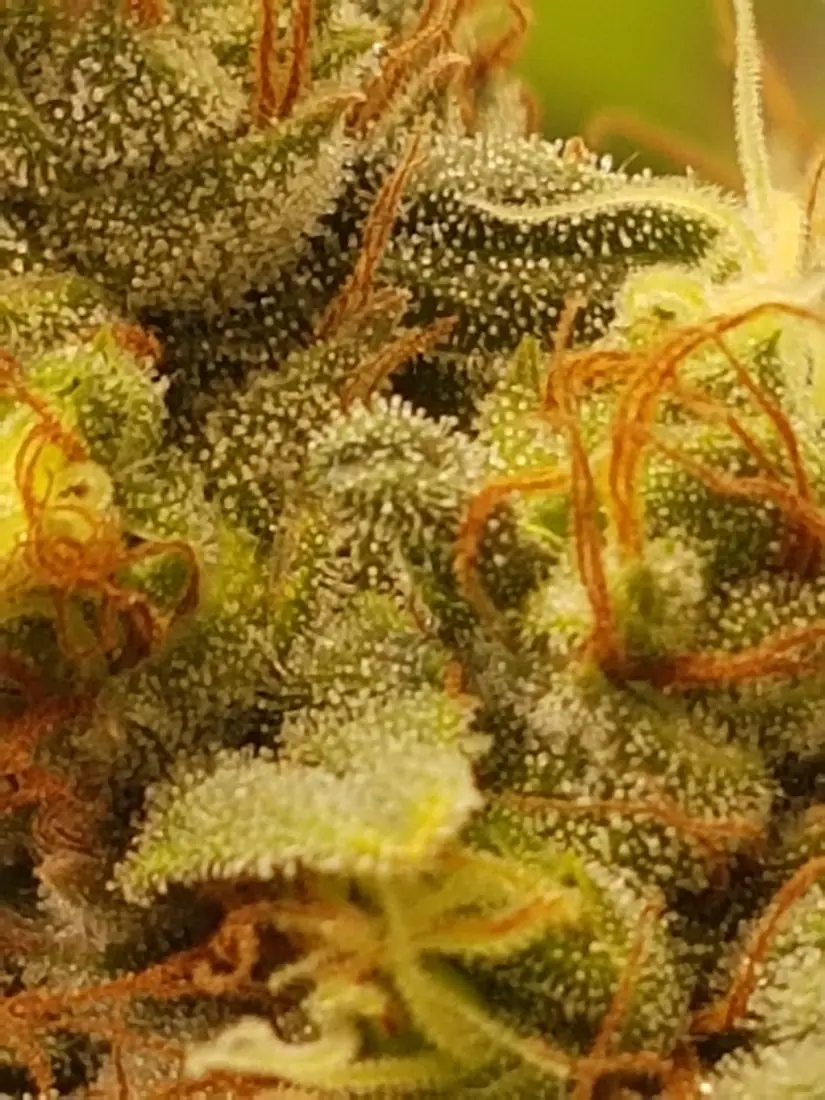
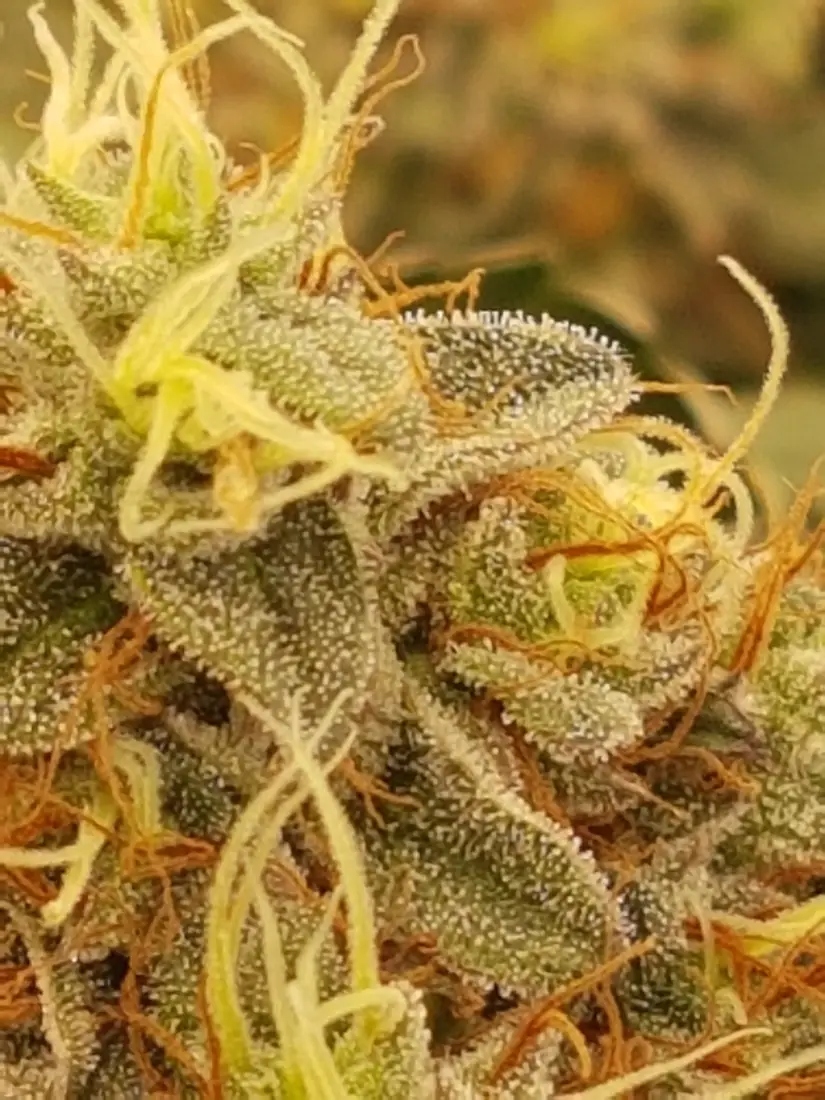
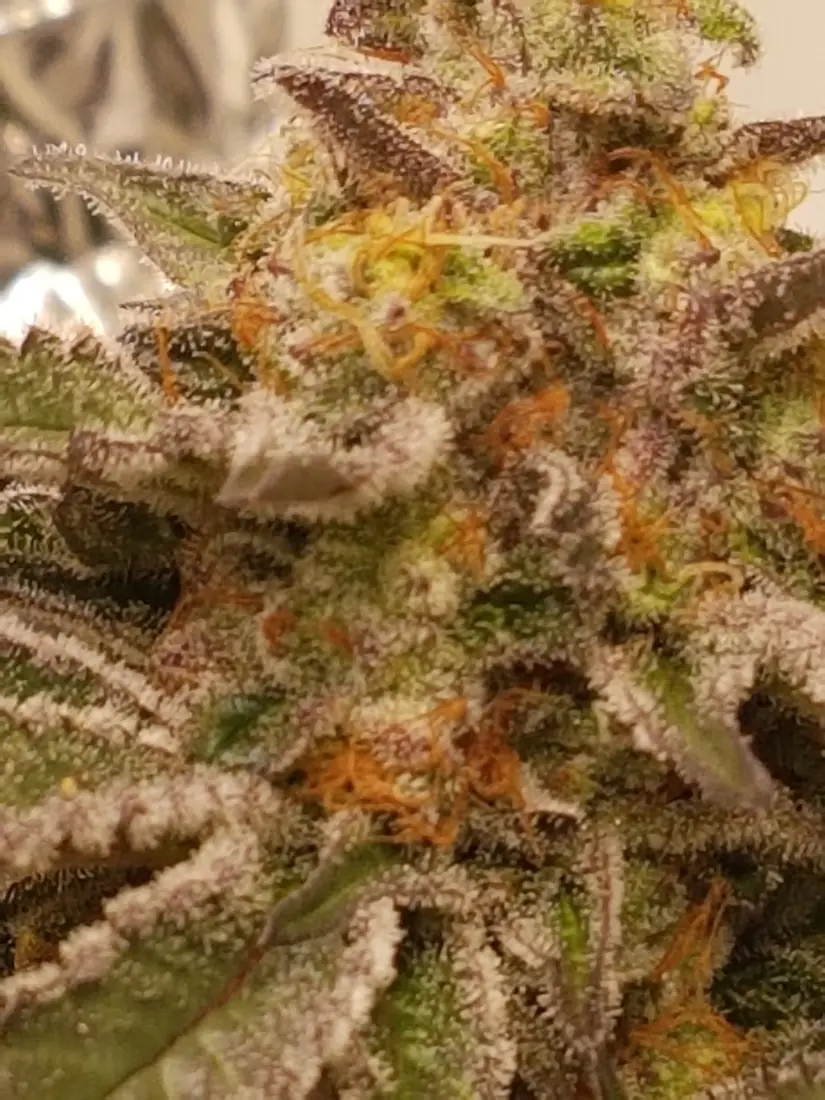
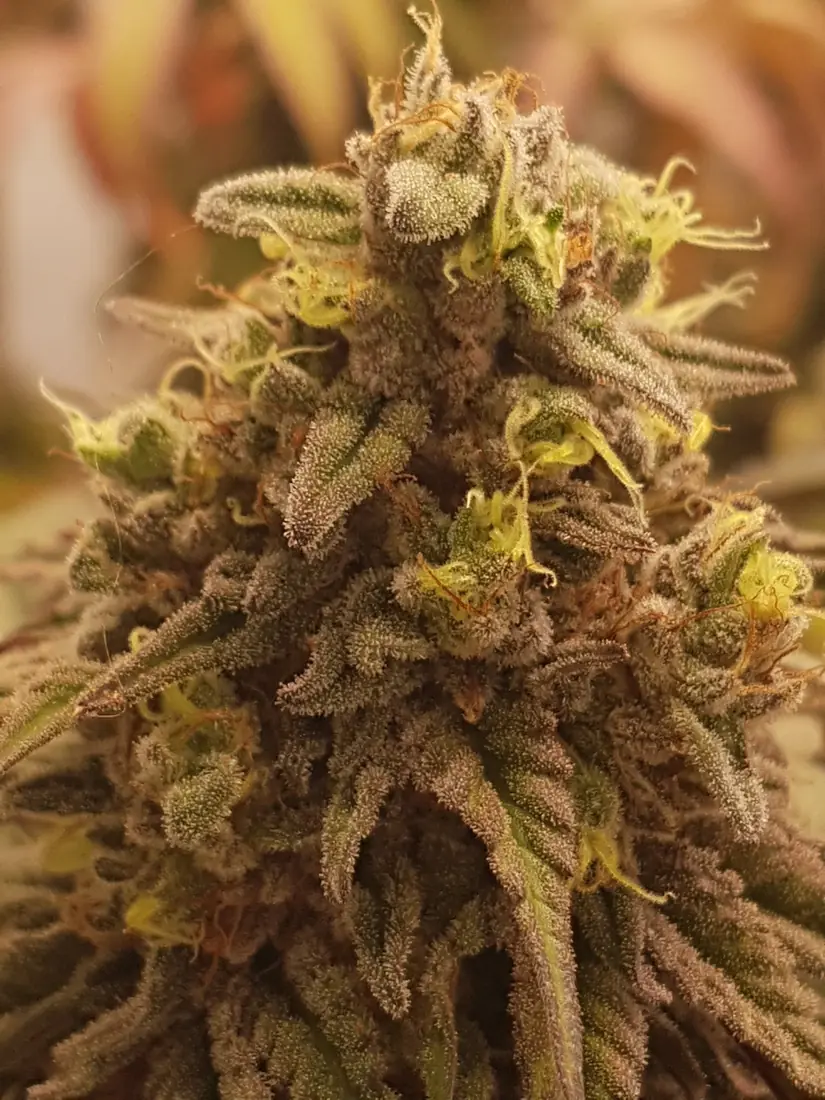

- From Flo’s grow: Aug 2025 – White Truffle (top bud), Red Hot Cookies and Dos Si Dos 33 with lots of resin
- From Flo’s grow: Aug 2025 – Passion Fruits and Tangerine Dream
- From Flo’s grow: Aug 2025 – Fruit Punch and Black Apple Hitchcock, one week before harvest
- From Flo’s grow: Aug 2025 – Black Apple Hitchcock, Fruit Punch and Passion Fruits, ready for harvest
- From Flo’s grow: Oct 2026 – “Soon …”: shortly before harvest
- From Flo’s grow: Oct 2026 – Grizzly Glue, Poison Envy, Eleven Roses and LA Kush Cake
You can’t tell by looking how much THC, CBD & co. a flower contains – only a lab analysis can show that.
Overview: what is established, what isn’t?
| Cannabinoid | Intoxicating? | State of research |
|---|---|---|
| THC | Yes | well established high, short-term effects on memory; efficacy of certain preparations e.g. for chronic pain. Risk association with psychosis with frequent use of high-potency products.[4][5][6] |
| CBD | Not like THC | well established approval for certain rare forms of epilepsy. preliminary many other uses.[7][8][9] |
| CBG | Not like THC | preliminary mostly lab and animal studies.[2] |
| CBN | Minimal / very weak Initial human trials | preliminary sleep effect not proven; first small study with mixed results.[10][11] |
| THCV | Non-intoxicating at low doses Initial human trials | Initial human trials Receptor pharmacology established; initial human RCT and fMRI trials on glycaemic control in type 2 diabetes (Jadoon et al. 2016) and reward/appetite processing.[1][14] |
My experience
For me personally, the high is only a minor side note – a small bonus. What truly fascinates me is the living plant itself, its botany, how trichomes develop, and the incredible diversity of terpenes!
That is why I never chase seed-pack marketing claims of “30%+ THC”. A healthy plant grown organically in Living Soil (with worm castings, sand and Seramis) with a complex terpene profile and balanced cannabinoid expression is far more rewarding than any single potency number.
Note: personal experiences are subjective and are not a recommendation or instruction to consume.
🌍 Translation note: This article was originally written in German and carefully translated. Are you a native speaker and noticed a phrasing or botanical term that could be improved? Feel free to message us at kontakt@igrowpedia.de or on X (@MisterSm3ilz420) – all contributors are honoured on request in our Language Patrons Acknowledgements!
Sources
All links last checked on 22 Oct 2026.
- Pertwee RG (2008): The diverse CB1 and CB2 receptor pharmacology of three plant cannabinoids: Δ9-tetrahydrocannabinol, cannabidiol and Δ9-tetrahydrocannabivarin. British Journal of Pharmacology 153(2):199–215. doi:10.1038/sj.bjp.0707442 review
- Nachnani R, Raup-Konsavage WM, Vrana KE (2021): The Pharmacological Case for Cannabigerol. Journal of Pharmacology and Experimental Therapeutics 376(2):204–212. doi:10.1124/jpet.120.000340 review
- Wang M, Wang YH, Avula B et al. (2016): Decarboxylation Study of Acidic Cannabinoids: A Novel Approach Using Ultra-High-Performance Supercritical Fluid Chromatography/Photodiode Array-Mass Spectrometry. Cannabis and Cannabinoid Research 1(1):262–271. doi:10.1089/can.2016.0020 laboratory study
- National Academies of Sciences, Engineering, and Medicine (2017): The Health Effects of Cannabis and Cannabinoids: The Current State of Evidence and Recommendations for Research. Washington, DC: The National Academies Press. doi:10.17226/24625 evidence report
- Englund A, Oliver D, Chesney E et al. (2023): Does cannabidiol make cannabis safer? A randomised, double-blind, cross-over trial of cannabis with four different CBD:THC ratios. Neuropsychopharmacology 48:869–876. doi:10.1038/s41386-022-01478-z randomised trial
- Di Forti M, Quattrone D, Freeman TP et al. (2019): The contribution of cannabis use to variation in the incidence of psychotic disorder across Europe (EU-GEI): a multicentre case-control study. The Lancet Psychiatry 6:427–436. doi:10.1016/S2215-0366(19)30048-3 case-control study
- U.S. Food and Drug Administration (25.06.2018): FDA approves first drug comprised of an active ingredient derived from marijuana to treat rare, severe forms of epilepsy. Press release. prnewswire.com; Approval documents: accessdata.fda.gov (NDA 210365) authority
- European Medicines Agency: Epidyolex (cannabidiol) – EPAR. ema.europa.eu/en/medicines/human/EPAR/epidyolex authority
- Iffland K, Grotenhermen F (2017): An Update on Safety and Side Effects of Cannabidiol: A Review of Clinical Data and Relevant Animal Studies. Cannabis and Cannabinoid Research 2(1):139–154. doi:10.1089/can.2016.0034 review
- Corroon J (2021): Cannabinol and Sleep: Separating Fact from Fiction. Cannabis and Cannabinoid Research 6:366–371. doi:10.1089/can.2021.0006 review
- Lavender IG, Marshall NS, McCartney D et al. (2026): Cannabinol for Acute Treatment of Insomnia Disorder in a Randomized Placebo-Controlled Crossover Trial. Journal of Sleep Research 35(4):e70284. doi:10.1111/jsr.70284 randomised trial
- Russo EB (2011): Taming THC: potential cannabis synergy and phytocannabinoid-terpenoid entourage effects. British Journal of Pharmacology 163:1344–1364. doi:10.1111/j.1476-5381.2011.01238.x review
- Gesetz zum Umgang mit Konsumcannabis (Konsumcannabisgesetz – KCanG), § 2. gesetze-im-internet.de/kcang/__2.html law
- Jadoon KA, Ratcliffe SH, Barrett DA et al. (2016): Efficacy and Safety of Cannabidiol and Tetrahydrocannabivarin on Glycemic and Lipid Parameters in Patients With Type 2 Diabetes: A Randomized, Double-Blind, Placebo-Controlled, Parallel Group Pilot Study. Diabetes Care 39(10):1777–1786. doi:10.2337/dc16-0650 (sowie Englund A et al. 2016, J Psychopharmacol 30(2):140–151; Tudge L et al. 2015, Int J Neuropsychopharmacol 18(6):pyu094) randomised trial