Sativa, indica & hybrids – what the terms really mean
“Sativa wakes you up, indica makes you sleepy.” You have surely heard that one. Here we look at where the terms come from, what they mean today – and what researchers found when they compared labels with genetics and chemical content.
The botanical meaning
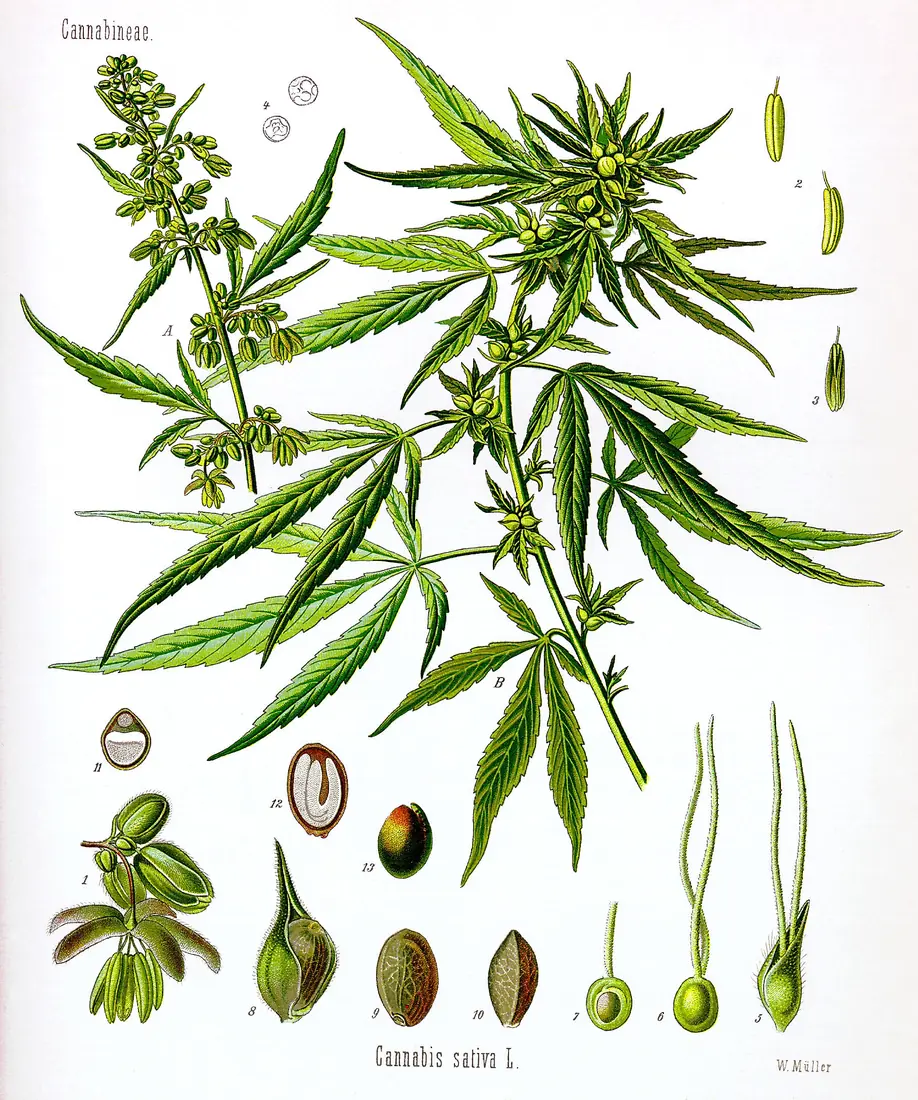
The names are old: Carl Linnaeus described Cannabis sativa in 1753 in his Species Plantarum – as a non-intoxicating fibre plant from Europe. 32 years later, Jean-Baptiste de Lamarck coined the name Cannabis indica for plants from India, Southeast Asia and South Africa. Interestingly, Lamarck described these plants as rather tall, loosely branched and with narrow leaflets.[1]
How many species the genus Cannabis contains has long been debated. In a review, researcher John McPartland concludes that DNA analyses support a split at the level of subspecies: C. sativa subsp. sativa (European, more CBD than THC) and C. sativa subsp. indica (Asian, more THC than CBD).[1] disputed
The everyday and marketing meaning
In today’s usage – on seed packs, in forums and on countless websites – “sativa” and “indica” mean something quite different from botany. According to McPartland, there:
| “Indica” (colloquial) | “Sativa” (colloquial) | |
|---|---|---|
| Growth | broad leaflets, compact, early maturing | narrow leaflets, slim and tall, late maturing |
| Claimed effect | relaxing, sedating | stimulating, “energetic” |
Summarised from McPartland (2018).[1]
The problem: these everyday terms arose from misattributions. Compact, broad-leaved plants from Afghanistan, for example, were called “indica”, although Lamarck’s original C. indica was tall and narrow-leaved. According to McPartland, the everyday terms therefore do not match formal botany “at all”.[1] well established
How arbitrary the labels can be is shown by an example from the same paper: one and the same strain won a competition first as best “sativa” and a few years later as best “indica”.[1]
What research says about the labels
Well established
- Genetics: an analysis of 81 drug-type and 43 hemp samples found only a moderate correlation between genetics and the reported “sativa”/“indica” ancestry. Strain names often did not reflect a meaningful genetic identity.[2]
- Another genetic study with more than 100 samples found that samples labelled “sativa” and “indica” were not genetically distinct genome-wide. Instead, the labels were associated with a handful of terpenes.[3]
- Chemical content: a large analysis of retail samples from six US states found clearly distinct chemical profiles (chemotypes), but the commercial labels did not reliably match these profiles.[4]
Limitations
- Some labels did show a tendency towards certain chemotypes – so they are not completely meaningless.[4]
- Each study examined only a limited selection of samples; whether the results apply to every strain is open.
- Transparency: study [3] was funded by a medical cannabis producer, and an employee of a cannabis information portal took part in study [4]. The conflicts of interest are disclosed in the articles.[3][4]
Chemotypes & terpenes: the better description
Instead of sorting by label, experts suggest describing cannabis by its chemical content – “from cultivar to chemovar”. One research group measured 28 main compounds (cannabinoids and terpenes) and was able to divide strains into clearly distinguishable chemical groups.[5]
For the most important difference – whether a plant makes mainly THC, mainly CBD or both – inheritance is surprisingly simple: in crossing experiments the ratio could be explained by a single locus. Plants with two “THC variants” made almost only THC, plants with two “CBD variants” almost only CBD, and heterozygous plants made both.[6] well established
If you want to compare strains, look at information on the cannabinoid ratio and the aroma/terpene profile rather than the word “sativa” or “indica”. And remember: such figures usually come from the breeder and are not an independent lab analysis.
And what are “hybrids”?
In everyday use, a “hybrid” is simply a cross between “sativa” and “indica” plants. According to McPartland, such crosses are now so ubiquitous that the distinction has become “nearly meaningless”; even more than 30 years ago, unmixed landraces were hard to come by.[1] Percentages such as “70 % sativa / 30 % indica” on seed packs should therefore be taken with a pinch of salt. What the term “F1 hybrid” means is explained in the article Seed types explained.
From Flo’s grow: growth, leaf shape and colour vary widely
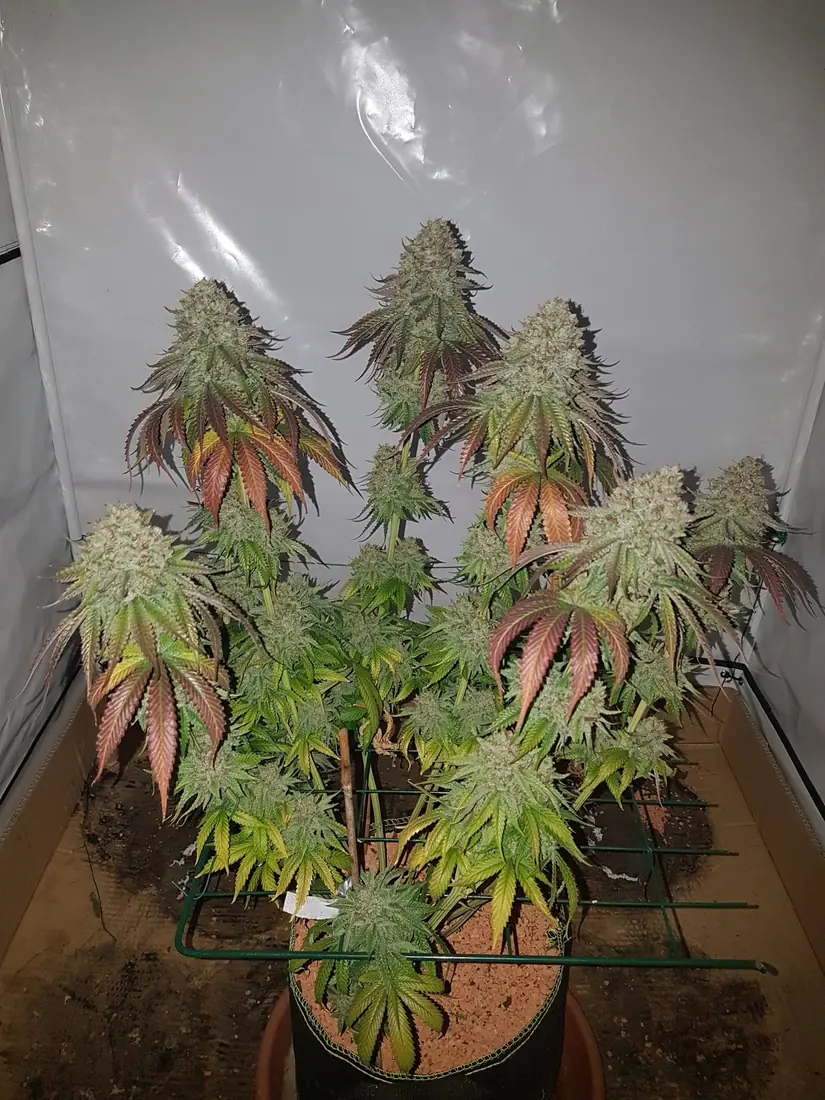
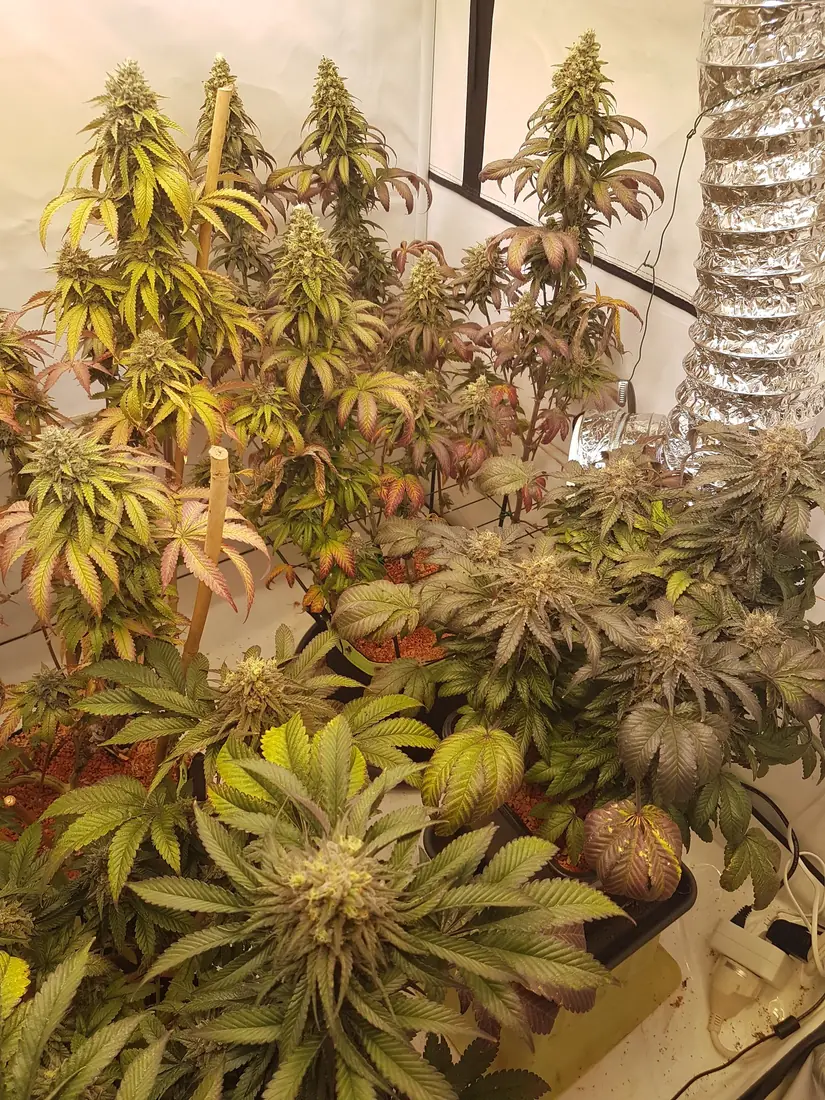
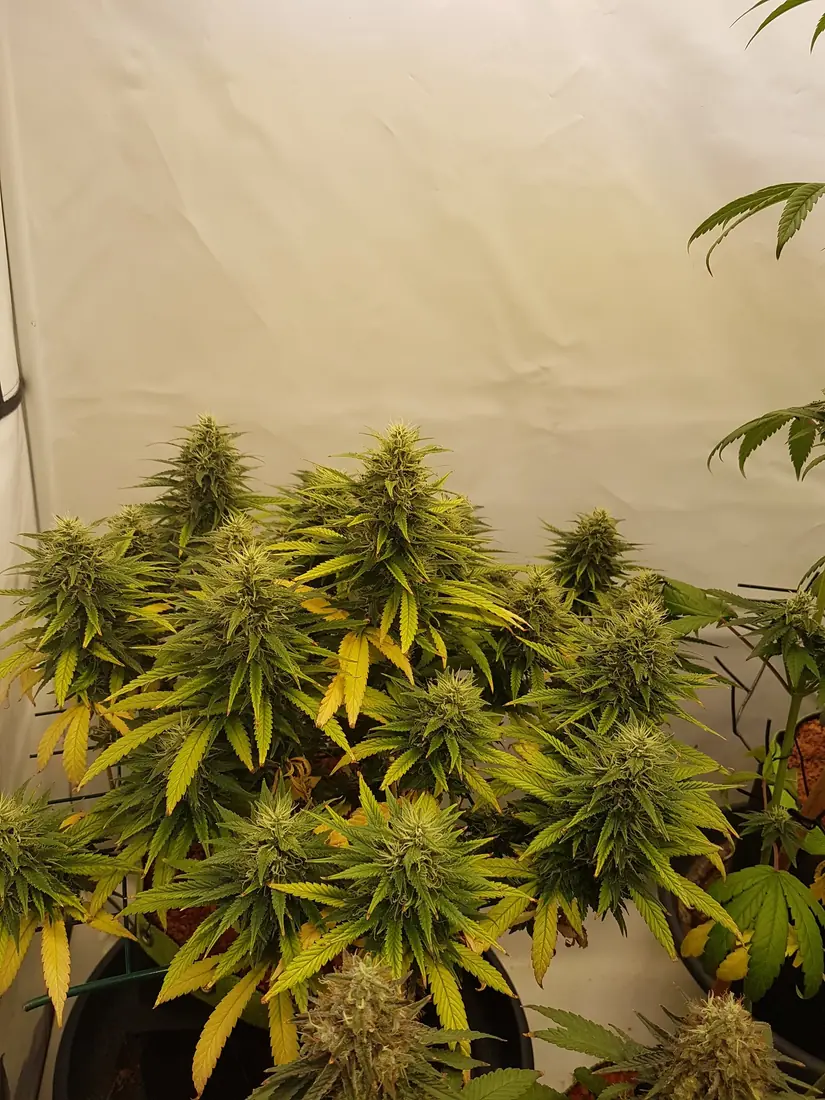
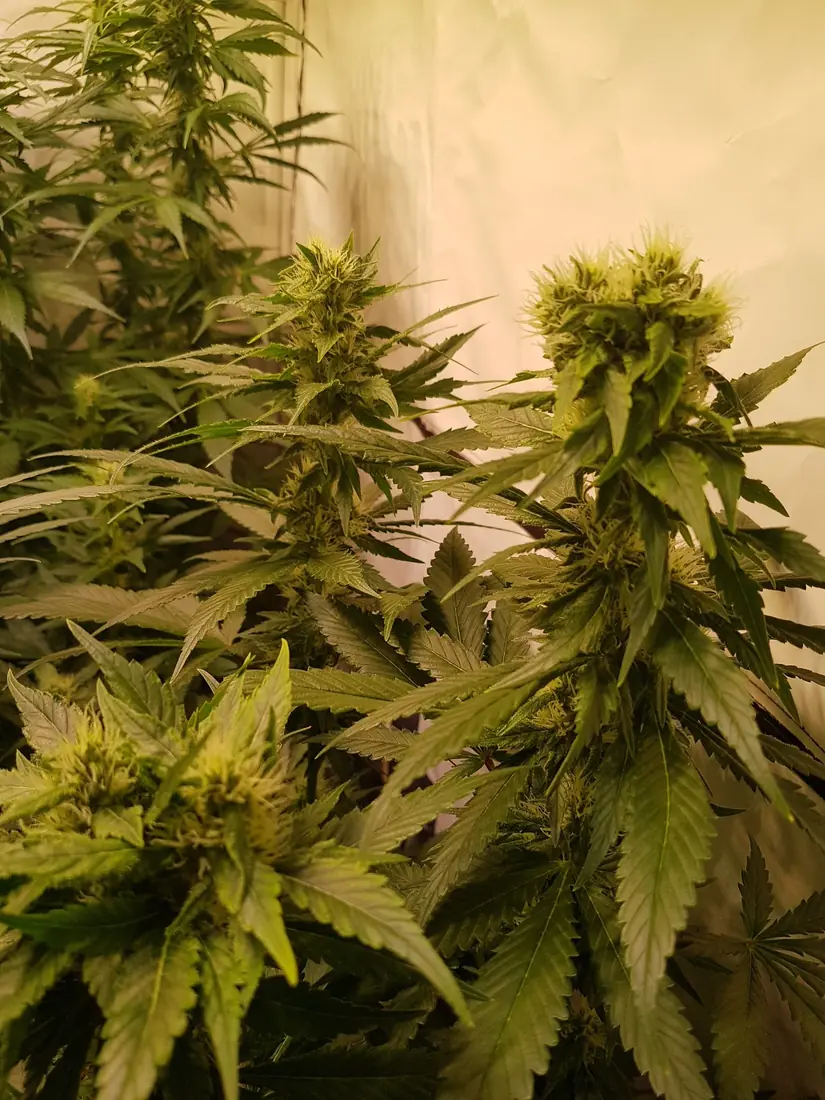


- From Flo’s grow: Oct 2026 – current run with Mango Kush, Lemon Cherry Gelato, Rainbow Sherbet and Blueberry, almost finished
- From Flo’s grow: Oct 2026 – Grizzly Glue, Poison Envy, Eleven Roses and LA Kush Cake
- From Flo’s grow: Aug 2025 – Passion Fruits and Tangerine Dream
- From Flo’s grow: Aug 2025 – start of flowering week 3, with a very resinous Red Hot Cookies phenotype
You cannot tell from a plant’s appearance how it will feel – which is exactly what this article is about.
Myth: “Indica makes you sleepy, sativa wakes you up”
We found no controlled studies that support this rule of thumb. What we did find: the labels match neither genetics nor measured chemical content reliably.[2][3][4] So if two strains feel different, that is more likely due to their specific profile – and to many other factors such as dose, setting and the person – than to the label.
My experience
In my own grow tent, I only use the terms “Indica” (broad-leaf / BLD) and “Sativa” (narrow-leaf / NLD) for canopy planning – to anticipate leaf width, flowering stretch after switching to 12/12, and when to apply topping, LST or a ScrOG screen.
When it comes to aroma and character, what truly matters is the plant’s terpene and cannabinoid profile (chemovar) and harvesting at peak trichome ripeness under a 60× loupe (75–85% milky trichomes).
Note: personal experiences are subjective and are not a recommendation or instruction to consume.
🌍 Translation note: This article was originally written in German and carefully translated. Are you a native speaker and noticed a phrasing or botanical term that could be improved? Feel free to message us at kontakt@igrowpedia.de or on X (@MisterSm3ilz420) – all contributors are honoured on request in our Language Patrons Acknowledgements!
Sources
All links last checked on 22 Oct 2026.
- McPartland JM (2018): Cannabis Systematics at the Levels of Family, Genus, and Species. Cannabis and Cannabinoid Research 3(1):203–212. doi:10.1089/can.2018.0039 review
- Sawler J, Stout JM, Gardner KM et al. (2015): The Genetic Structure of Marijuana and Hemp. PLoS ONE 10(8):e0133292. doi:10.1371/journal.pone.0133292 genetic study
- Watts S, McElroy M, Migicovsky Z et al. (2021): Cannabis labelling is associated with genetic variation in terpene synthase genes. Nature Plants 7(10):1330–1334. doi:10.1038/s41477-021-01003-y genetic study
- Smith CJ, Vergara D, Keegan B, Jikomes N (2022): The phytochemical diversity of commercial Cannabis in the United States. PLoS ONE 17(5):e0267498. doi:10.1371/journal.pone.0267498 analysis of retail samples
- Hazekamp A, Fischedick JT (2012): Cannabis – from cultivar to chemovar. Drug Testing and Analysis 4(7–8):660–667. doi:10.1002/dta.407 laboratory study
- de Meijer EPM, Bagatta M, Carboni A et al. (2003): The inheritance of chemical phenotype in Cannabis sativa L. Genetics 163(1):335–346. doi:10.1093/genetics/163.1.335 crossing study