What is a landrace?
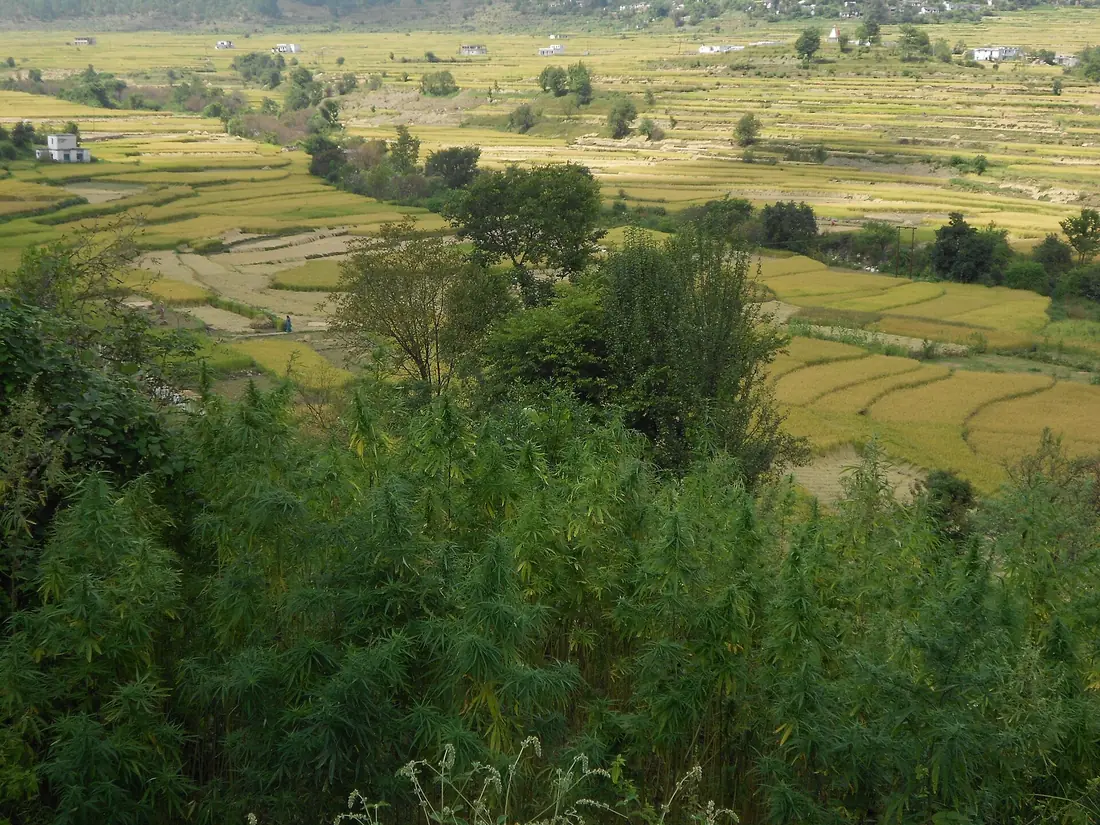

For me, landraces are the heart of cannabis history: plants that were grown and passed on for generations in one particular region – long before there were seed banks and crossing hypes. But what exactly is a landrace, and how can you tell a genuine one?
The definition
“Landrace” is not a cannabis term; it comes from plant breeding in general – there are landraces of wheat, maize and tomatoes too. A widely cited working definition reads, in essence:
A landrace is a dynamic population of a cultivated plant with a historical origin and a distinct identity that has not undergone formal breeding – and that is often genetically diverse, locally adapted and associated with traditional farming systems.[1]
The word “often” is important: the authors stress that not every landrace has to meet all the criteria at once.[1] The term has long been defined in different ways.[5] well established
How landraces came about
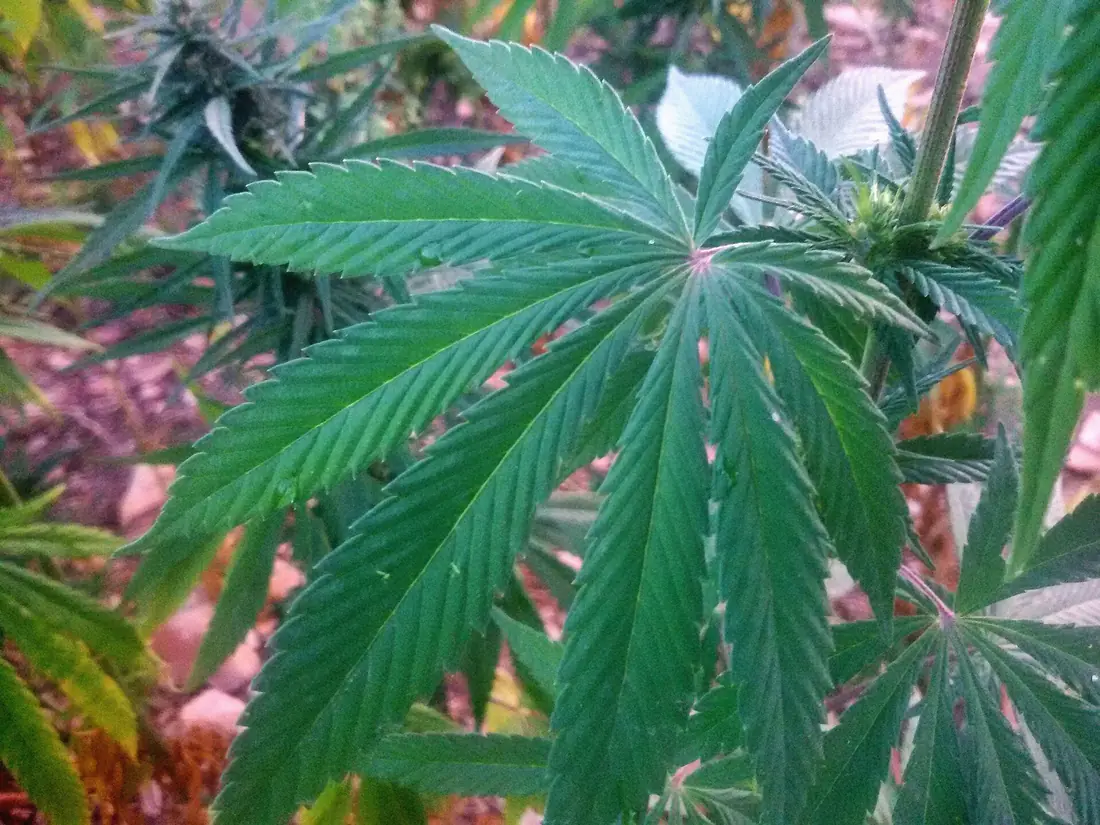

A large genome study with 110 samples from around the world concluded that cannabis was first domesticated in the early Neolithic in East Asia. According to the study, all of today’s hemp and drug-type varieties derive from a common ancestral gene pool that is still represented today by feral plants and landraces in China.[2] research in flux
From there, people spread the plant over thousands of years. In each region, farmers selected over generations the plants that best suited their purposes and climate. How strongly geography, climate and traditional practice shape a landrace is shown by a study of 145 Iranian landrace accessions: the researchers found three genetically distinct groups shaped by precisely these factors.[6]
Landrace vs. modern hybrids & polyhybrids
| Landrace | Modern hybrids / “polyhybrids” | |
|---|---|---|
| Origin | selected locally over generations, without formal breeding[1] | targeted crosses, often from many different lines |
| Provenance | clearly attributable to one region[1] | a mix of genetics from different origins[3] |
| Diversity | often genetically diverse within the population[1] | selected for specific traits |
| Adaptation | often adapted to their climate of origin[1] | frequently bred for indoor conditions[1][3] |
By the way, “polyhybrid” is not a scientific term but grower jargon for strains in which a great many lines have been crossed together. According to McPartland, crosses are now so ubiquitous that they have largely blurred the differences between the original populations.[3] More on the terms in the article Sativa, indica & hybrids.
Why landraces matter for genetic diversity
Well established
- In general, a large part of the genetic diversity of crops lies in traditional varieties – and these are threatened above all by being displaced by uniform modern varieties.[1]
- For cannabis, there are still hardly any public gene banks. Experts call for landraces and original populations to be collected, conserved and studied in a targeted way.[4]
The problem: is it really a landrace if the label says so?
According to McPartland, unmixed plants of Indian origin and Afghan landraces were already hard to come by more than 30 years ago.[3] On top of that, a genetic study found that strain names often do not reflect a meaningful genetic identity.[7] So a regional name on a seed pack is not yet proof of a genuine, unmixed landrace.

“Landrace” is not a protected term on seed packs. Without information on provenance – where, when and how it was collected, how it has been propagated since – authenticity cannot be judged. And even a genuine landrace changes when it is propagated for generations far from home or crosses with other plants. When propagated outside their region of origin (ex situ), the loss of native selection pressures (climate, altitude, soil, UV light) and small population sizes rapidly cause genetic drift and adaptation to the new environment within just a few generations (Camacho Villa et al. 2005; Clarke & Merlin 2013; Small 2015; Casañas et al. 2017).[1][3][9]
Legal note (Germany): for private home growing, cannabis seeds may only be imported from EU member states (§ 4(2) KCanG).[8] Bringing back or ordering seeds directly from the countries of origin of many landraces is therefore not permitted for home growing in Germany – and in many of those countries cannabis itself is illegal.
My experience
My motto has always been: “Understand nature, then copy nature” (Kapier die Natur, dann kopier die Natur). While modern commercial hybrids are bred for uniform indoor tents, traditional landraces showcase how nature shaped cannabis across millennia – from high-altitude Hindu Kush valleys to tropical Southeast Asia and Africa.
For me, the high is secondary; preserving this genetic heritage, its unique terpene profiles and its ethnobotanical history is what makes landraces so special.
Note: personal experiences are subjective and are not a recommendation.
🌍 Translation note: This article was originally written in German and carefully translated. Are you a native speaker and noticed a phrasing or botanical term that could be improved? Feel free to message us at kontakt@igrowpedia.de or on X (@MisterSm3ilz420) – all contributors are honoured on request in our Language Patrons Acknowledgements!
Sources
All links last checked on 22 Oct 2026.
- Camacho Villa TC, Maxted N, Scholten M, Ford-Lloyd B (2005): Defining and identifying crop landraces. Plant Genetic Resources 3(3):373–384. doi:10.1079/PGR200591 review
- Ren G, Zhang X, Li Y et al. (2021): Large-scale whole-genome resequencing unravels the domestication history of Cannabis sativa. Science Advances 7(29):eabg2286. doi:10.1126/sciadv.abg2286 genetic study
- McPartland JM (2018): Cannabis Systematics at the Levels of Family, Genus, and Species. Cannabis and Cannabinoid Research 3(1):203–212. doi:10.1089/can.2018.0039 review
- Torkamaneh D, Jones AMP (2022): Cannabis, the multibillion dollar plant that no genebank wanted. Genome 65(1):1–5. doi:10.1139/gen-2021-0016 opinion piece
- Zeven AC (1998): Landraces: A review of definitions and classifications. Euphytica 104(2):127–139. doi:10.1023/A:1018683119237 review
- Babaei M, Torkamaneh D (2026): Genetic architecture of phenological, morphological, and phytochemical traits in Cannabis landraces. The Plant Genome 19(2):e70243. doi:10.1002/tpg2.70243 genetic study
- Sawler J, Stout JM, Gardner KM et al. (2015): The Genetic Structure of Marijuana and Hemp. PLoS ONE 10(8):e0133292. doi:10.1371/journal.pone.0133292 genetic study
- Konsumcannabisgesetz (KCanG), § 4. gesetze-im-internet.de/kcang/__4.html law
- Casañas F, Simó J, Casals J, Prohens J (2017): Toward an Evolved Concept of Landrace. Frontiers in Plant Science 8:145. doi:10.3389/fpls.2017.00145 (sowie Clarke RC, Merlin MD 2013, Cannabis: Evolution and Ethnobotany; Small E 2015, Bot. Rev. 81:189–294) review